
Choosing Slinger De-Icers for international operations requires more than comparing hopper capacity or purchase price. Buyers must examine spreading accuracy, corrosion resistance, loading access, road conditions, and after-sales support. A machine working beside a frozen airport apron faces different demands from one serving mountain roads or urban bridges. The details matter.
The Federal Highway Administration’s Manual of Practice for an Effective Anti-Icing Program reports that suitable anti-icing strategies can reduce chemical use by approximately 25% to 75%. However, equipment must deliver the material consistently. Uneven application can leave untreated strips, waste salt, and increase environmental pressure. The U.S. Environmental Protection Agency also warns that excessive road salt can affect freshwater ecosystems and infrastructure. That risk is global.
Dr. Wilfrid Nixon, a recognized winter-maintenance researcher, has stated, “There is no magic bullet.” His point remains important for Slinger De-Icers buyers. No single spreader suits every climate, carrier, or deicing material. Buyers should request field data, calibration procedures, corrosion warranties, and service records. ISO documentation helps, but it does not replace practical testing. A polished brochure is not enough.
Regional regulations, operator training, and local material availability may change the final decision. Some buyers may overvalue payload and overlook discharge control. That is an easy mistake. A reliable selection process compares lifecycle cost, not only the initial invoice. Reports from FHWA and environmental agencies provide useful direction, yet real-world trials should confirm performance before large-scale procurement.
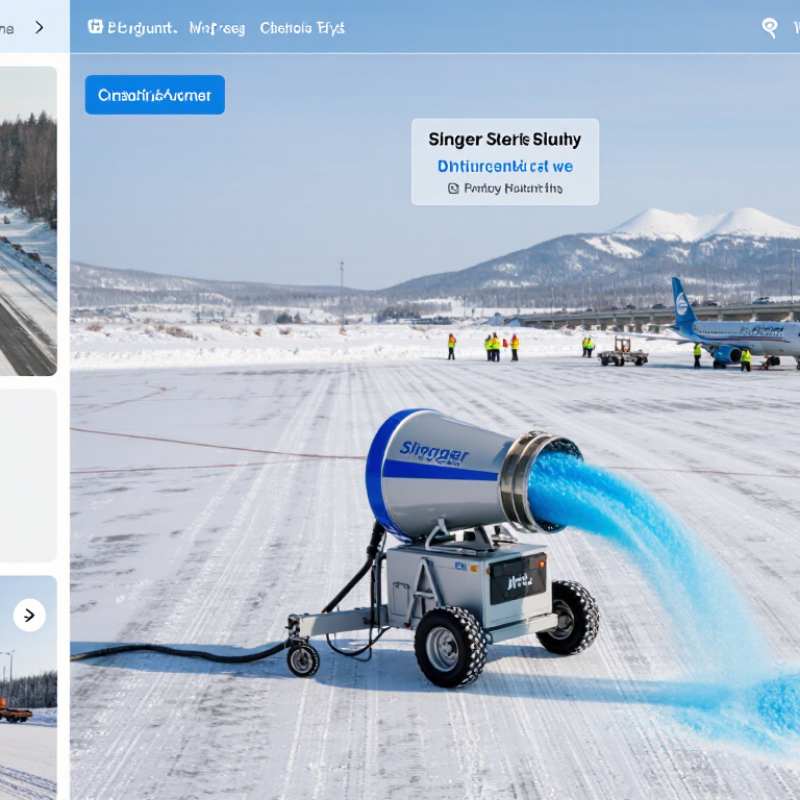
Slinger de-icers are mobile systems that distribute granular, pre-wet, or liquid de-icing materials across cold surfaces. Their main applications include airport aprons, runways, bridges, highways, warehouse yards, ports, and industrial access roads. A rotating disc or conveyor spreads material quickly, while adjustable rates help control coverage and waste. The U.S. Federal Highway Administration reports that about 70% of the nation’s roads are located in snowy regions. This explains the continuing demand for reliable winter-maintenance equipment.
Global buyers should match the machine to surface size, weather, and material type. Airport operators need accurate low-rate spreading, corrosion-resistant components, and compatibility with winter-operation procedures described in FAA Advisory Circular 150/5200-30D. Highway contractors may prioritize hopper capacity, spreading width, traction, and rapid refilling. For sensitive concrete areas, acetate-based products can reduce chloride exposure, but they usually cost more. Salt performance also changes sharply below very low temperatures. That detail is easy to miss.
Calibration matters more than maximum throwing distance. The National Academies’ winter maintenance research repeatedly links material control with safer, more efficient operations. Buyers should request application-rate tests, temperature data, maintenance records, and local spare-parts support. A wider spray pattern is not automatically better. Wind can move fine particles away from the target. Operators may also need different settings for bridges and sheltered yards. No single configuration works everywhere, and treating manufacturer specifications as field results can lead to expensive mistakes.
Understanding Slinger De-Icers and Their Main Applications
The chart shows representative rotational-speed ranges for aircraft platforms where centrifugal fluid distribution is relevant to slinger-type de-icing systems. Propeller aircraft generally require higher rotational speeds than helicopters, so buyers should verify pump flow, fluid compatibility, ring balance, temperature range, and aircraft electrical integration before selecting a system. Values are typical engineering ranges rather than market-share data.
Choosing a slinger de-icer starts with the site, not the catalog. Climate controls the workload. Measure the lowest air temperature, freezing duration, wind exposure, and expected ice thickness. A cold, windy lake needs more circulation than a sheltered pond. However, local weather records can mislead when conditions change quickly. I have found that one severe week may shape the purchase more than an average winter.
Water conditions determine whether the equipment performs consistently. Check salinity, depth, current, turbidity, floating debris, and nearby structures. Saltwater and brackish water can accelerate corrosion, so wetted materials and fasteners require careful review. In shallow water, propeller flow may disturb sediment or expose the unit during low levels. A floating installation needs secure positioning against wind and waves. Do not judge coverage from a brochure diagram alone. Test actual water movement when possible.
De-icing requirements should be written in measurable terms. Define the protected width, operating hours, available voltage, control method, and acceptable noise level. Ports, marinas, aquaculture sites, and industrial basins may need different ice-free zones. Confirm electrical protection, grounding, clearance, and maintenance access with qualified local professionals. Regional regulations and installation practices vary. A practical choice also considers replacement parts and winter servicing. I once underestimated maintenance access, and the installation became unnecessarily difficult. Leave a safety margin, but do not oversize blindly; excess power can increase costs and turbulence.
For global buyers, a slinger de-icer should be judged beyond its advertised output. The material determines durability, weight, and corrosion resistance. Stainless steel handles wet salt better than ordinary painted steel, but it usually costs more. Reinforced polymers reduce weight, although cold-weather brittleness can become a concern. ISO 9227 salt-spray testing offers useful corrosion evidence, but it does not reproduce every field condition.
Capacity must match the operating site, not only the catalog figure. A unit rated for 500 kilograms per hour may perform poorly when material bridges inside the hopper. Check usable capacity, spreading width, feed consistency, and refill time. Field trials matter. The International Energy Agency reports that electric motor systems consume roughly 45% of global electricity, making drive efficiency important. Variable-speed control can reduce unnecessary power during lighter spreading, though savings depend on actual duty cycles.
Energy data should include standby use, motor rating, and performance at low temperatures. Ask suppliers for test conditions, not isolated efficiency percentages. EN 50598 methods can help compare motor-driven equipment, while local electrical standards still require verification. Operators should inspect bearings, seals, and cables after repeated freeze-thaw cycles. Small oversights become expensive. One imperfect assumption remains common: maximum capacity is treated as the best choice. In practice, stable feeding and simple maintenance may deliver better lifetime value.
Choosing a slinger de-icer for international use requires more than comparing heating power and purchase price. The equipment should match its operating environment, voltage system, and safety expectations.
Ask the supplier for test reports, conformity declarations, and certification numbers. Check whether an accredited laboratory issued them. Common references may include IEC electrical safety standards, EMC requirements, and regional marks such as CE, UKCA, UL, or CSA. Requirements differ by destination. A certificate alone is not enough. Confirm its scope, expiry date, tested model, and approved accessories. Do not rely on a logo image alone.
Voltage and frequency deserve careful attention. A unit designed for 230 V and 50 Hz may not suit a 120 V and 60 Hz facility. Check plug types, grounding methods, cable ratings, and protection against moisture or dust. An appropriate IP rating matters in wet yards and freezing conditions. Ask whether seals, heaters, controls, and replacement parts remain available locally. Clear manuals should explain installation, emergency isolation, inspection, and maintenance.
Field checks often reveal small compatibility problems. For example, a connector may fit physically but fail local electrical rules. That mistake is costly. It is also easy to overvalue paperwork and undervalue operator training. Request a sample risk assessment and confirm service support in the target country. Global compatibility is never automatic. Even well-documented equipment may need site-specific review.
| Evaluation Dimension | Recommended Requirement | Relevant Standard or Regulation | Evidence to Request | Global Compatibility Check |
|---|---|---|---|---|
| Risk Assessment and Machine Design | The rotating spreader, auger, discharge chute, guards, and maintenance points should be assessed for mechanical, electrical, hydraulic, noise, and residual risks. | ISO 12100:2010 for machinery risk assessment and risk reduction. | Risk assessment, operating instructions, maintenance procedures, and list of residual risks. | Confirm that the assessment covers the intended vehicle, material, operating temperature, road conditions, and working environment. |
| Moving-Part Protection | Guards should prevent access to the impeller, auger, chain, belt, and other dangerous moving parts during normal operation. | ISO 14120 for the design and construction of fixed and movable guards; ISO 13857 for safety distances. | Guarding drawings, access-point inspection records, and photographs of installed protection. | Check whether guards remain effective when the unit is mounted on different truck, tractor, or loader configurations. |
| Emergency Stop and Control System | Controls should be clearly identified, protected from accidental activation, and arranged so the operator can stop hazardous motion quickly. | ISO 13850 for emergency-stop functions; ISO 13849-1 may apply to safety-related control systems. | Control circuit diagram, emergency-stop validation report, and functional test procedure. | Verify compatibility with the host vehicle's ignition, interlock, remote-control, and shutdown circuits. |
| Electrical Safety | Electrical parts should be protected against short circuits, reverse polarity, overload, moisture, vibration, and incorrect connection. | IEC 60204-1 may apply to electrical equipment of machinery; ISO 16750 is commonly used for road-vehicle electrical and environmental testing. | Wiring diagram, fuse specifications, connector ratings, insulation test results, and environmental test data. | Confirm the available vehicle voltage, typically 12 V or 24 V DC, current capacity, grounding method, and connector type. |
| Ingress and Weather Resistance | Control boxes, motors, sensors, and connectors should be suitable for snow, salt spray, water jets, dust, and freeze-thaw cycles. | IEC 60529 defines IP-code protection levels; the appropriate IP rating depends on the installation location and exposure. | IP test report, enclosure datasheet, corrosion-protection specification, and cable-sealing details. | For exposed components, request a documented rating such as IP65 or higher only when it matches the actual installation and test conditions. |
| Hydraulic System Safety | Hydraulic hoses, fittings, relief devices, cylinders, and motors should be rated for the maximum pressure, temperature, and duty cycle. | ISO 4413 for hydraulic fluid power systems and their general safety requirements. | Hydraulic schematic, rated-pressure information, hose certificates, pressure-test records, and maintenance instructions. | Compare required flow and pressure with the host vehicle's hydraulic circuit; verify coupling standards and fluid compatibility. |
| Electromagnetic Compatibility | Electronic controllers should not create unacceptable interference and should continue operating safely in the vehicle's electromagnetic environment. | Applicable EMC requirements may include UNECE R10 for vehicle-related equipment and regional EMC legislation. | EMC test report, declaration of conformity where applicable, shielding information, and installation instructions. | Check whether the test configuration represents the actual vehicle wiring, controller, antenna, and power-supply arrangement. |
| European Market Compliance | Products placed on the European Union market must meet all legislation applicable to their final configuration and intended use. | The Machinery Regulation (EU) 2023/1230 will replace the Machinery Directive from 20 January 2027; other applicable legislation may include EMC, RoHS, and REACH requirements. | EU Declaration of Conformity, technical documentation, CE marking information, and user instructions in required languages. | Do not treat CE marking alone as proof of product quality; confirm the exact model, configuration, applicable legislation, and responsible economic operator. |
| United Kingdom Market Compliance | Products supplied in Great Britain may require UK conformity assessment and UK marking rules, subject to current transitional arrangements. | Applicable UK product-safety legislation, including machinery and EMC requirements. | UK Declaration of Conformity where required, technical file, marking information, and importer or manufacturer details. | Check the latest UK government requirements before shipment because marking and recognition rules can change. |
| North American Electrical and Workplace Safety | Electrical assemblies should use components accepted for the target installation and comply with local authority and workplace requirements. | Applicable national and local electrical codes, workplace safety rules, and vehicle-equipment requirements; requirements vary by jurisdiction. | Component listings, wiring diagrams, installation instructions, and local certification or field-evaluation documents where required. | Confirm whether the purchasing authority requires third-party certification, field inspection, or specific enclosure and wiring methods. |
| Material and Chemical Compatibility | The hopper, auger, chute, fasteners, seals, and coatings should resist the de-icing material used, including chloride-based salts or treated abrasives. | REACH and RoHS may apply to products placed on the EU market; corrosion resistance must also be verified through engineering data. | Material list, coating specification, chemical-resistance data, SDS for the de-icing material, and cleaning instructions. | Match the equipment to the actual salt, brine, sand, or agricultural-compatible treatment material and its moisture content. |
| Operating Temperature and Cold-Weather Performance | The system should maintain safe starting, feeding, control, sealing, and lubrication performance at the buyer's lowest expected temperature. | Environmental testing should be defined by the application; ISO 16750 can support road-vehicle environmental evaluation for relevant components. | Specified operating-temperature range, cold-start test results, lubricant data, battery requirements, and de-icing-material flow test. | Check performance for both dry and damp material, because moisture can cause bridging, clogging, and inconsistent spreading. |
| Vehicle Mounting and Load Capacity | The mounting frame, fasteners, center of gravity, axle load, and payload must remain within the host vehicle manufacturer's limits. | Relevant vehicle regulations and engineering requirements depend on the vehicle category and country of use. | Mounting drawing, rated payload, structural calculations, fastener grades, and axle-load guidance. | Verify dimensions, attachment points, ground clearance, lighting visibility, transport width, and local road-approval requirements. |
| Noise and Operator Exposure | Noise emissions should be measured under representative operating conditions and reduced through design, guarding, and operating procedures where necessary. | ISO 3744 or other applicable acoustic test methods may be used to determine sound power levels; local occupational limits vary. | Noise-test method, measured sound-power data, operator-exposure guidance, and required hearing-protection instructions. | Confirm whether the equipment will operate in residential areas, enclosed yards, airports, or other noise-sensitive locations. |
| Documentation, Labeling, and Traceability | The unit should carry a durable identification plate and safety labels, supported by clear operating, inspection, and service documentation. | ISO 20607 provides principles for machinery instruction manuals; local language and labeling laws may also apply. | Serial-number system, multilingual manual, spare-parts list, inspection checklist, warranty terms, and conformity documents. | Request documentation in the destination market's required language and ensure electrical, hydraulic, and safety symbols are internationally understandable. |
Choosing slinger de-icers for international operations requires more than comparing catalog prices. Start by examining the supplier’s technical experience, production controls, and export documentation. Ask for material specifications, corrosion testing, drive-system details, and performance data in cold, wet conditions. A reliable supplier should explain limitations clearly, not promise perfect spreading in every environment.
Installation needs vary by truck design, climate, and work schedule. Confirm hopper dimensions, mounting points, hydraulic or electric requirements, control-cab compatibility, and safe access for maintenance. Request drawings before purchase. A five-millimeter mismatch can delay installation and create expensive workshop work. Consider calibration space, spare parts storage, and operator training. Small details matter.
Cost evaluation should include shipping, customs handling, installation labor, calibration, energy use, wear parts, and seasonal storage. The lowest quotation may become expensive after one winter. Ask for a transparent warranty, response times, remote troubleshooting, and local service coverage. Replacement components should have clear lead times. Test support before signing. Send a technical question and measure the response.
Field experience also shows that specifications can be misunderstood across languages. Written acceptance criteria reduce disputes. Still, no checklist is perfect. Actual spreading results may change with salt moisture, vehicle speed, and road temperature. Plan a supervised trial, record application rates, and review failures honestly. That review is often more useful than a polished sales presentation.
Measure the lowest temperature, freezing duration, wind exposure, and expected ice thickness. One severe week can matter more than average winter conditions.
Check salinity, depth, current, turbidity, debris, and nearby structures. Shallow water may disturb sediment or expose the unit during low levels.
It can work, but secure positioning is essential. Wind and waves may shift the unit, reducing the protected area.
Specify the protected width, operating hours, available voltage, control method, and acceptable noise level. Be measurable.
Corrosion-resistant metal generally handles salty water better than painted steel. Reinforced polymers reduce weight, but cold-weather brittleness needs checking.
Not completely. A rated capacity may fall when material bridges inside the hopper. Check usable capacity, spreading width, feed consistency, and refill time.
Request motor ratings, standby consumption, low-temperature performance, and test conditions. A single efficiency percentage tells too little.
No. Excess power can increase costs and turbulence. Stable feeding and simple maintenance may provide better long-term value.
Inspect bearings, seals, cables, and electrical protection after repeated freeze-thaw cycles. Maintenance access matters more than expected. I underestimated it once.
Yes. Qualified local professionals should confirm grounding, clearance, electrical protection, and regional requirements. Installation practices vary.
Choosing the right Slinger De-Icers requires a clear understanding of how these systems operate and where they are most needed, such as ponds, lakes, marinas, aquaculture facilities, and industrial water areas. Buyers should assess local climate, ice thickness, water movement, salinity, debris levels, and the required de-icing range before selecting a model. Material durability, operating performance, lifting or circulation capacity, noise levels, and energy efficiency are also important factors for long-term value.
Global buyers should confirm that the equipment meets relevant safety standards, electrical requirements, environmental expectations, and certification rules in the destination market. Supplier evaluation should include product reliability, installation guidance, maintenance requirements, delivery capability, spare-part availability, warranty terms, and after-sales support. By comparing technical specifications, total ownership costs, and service resources, purchasers can select Slinger De-Icers that provide dependable ice prevention, efficient operation, and compatibility with different water conditions and international applications.