
Family-Owned Manufacturer · Holland, Michigan, USA · Since 1963 Customer Service: +1-616-355-2451
0%

Choosing reliable Display Fountain Aerators requires more than comparing prices and product photographs. Buyers must assess water flow, spray height, motor efficiency, lighting performance, and installation conditions. This guide introduces leading display fountain aerator suppliers in China and explains how to evaluate their capabilities with practical care.

Experienced suppliers usually provide detailed specifications, including nozzle diameter, pump power, operating depth, cable length, and recommended pond size. Stainless steel construction, sealed motor housings, and corrosion-resistant fasteners can improve service life. However, impressive specifications do not guarantee dependable performance. Request test videos, factory photographs, sample units, and recent project references before placing a large order.

A professional supplier should also support design selection, wiring guidance, packaging, spare parts, and after-sales service. Buyers should verify applicable certifications and confirm compliance with local electrical and water safety requirements. Factory audits, third-party inspections, and clear warranty terms add useful protection. They also reveal weaknesses early.

This overview focuses on suppliers with practical manufacturing experience, documented quality procedures, and responsive technical communication. It considers products for hotels, public parks, commercial plazas, resorts, and landscape projects. Real performance depends on water quality, maintenance, climate, and installation accuracy. No supplier is perfect. That matters. Careful comparison helps buyers avoid unsuitable equipment and build attractive fountain displays with more predictable operating results.
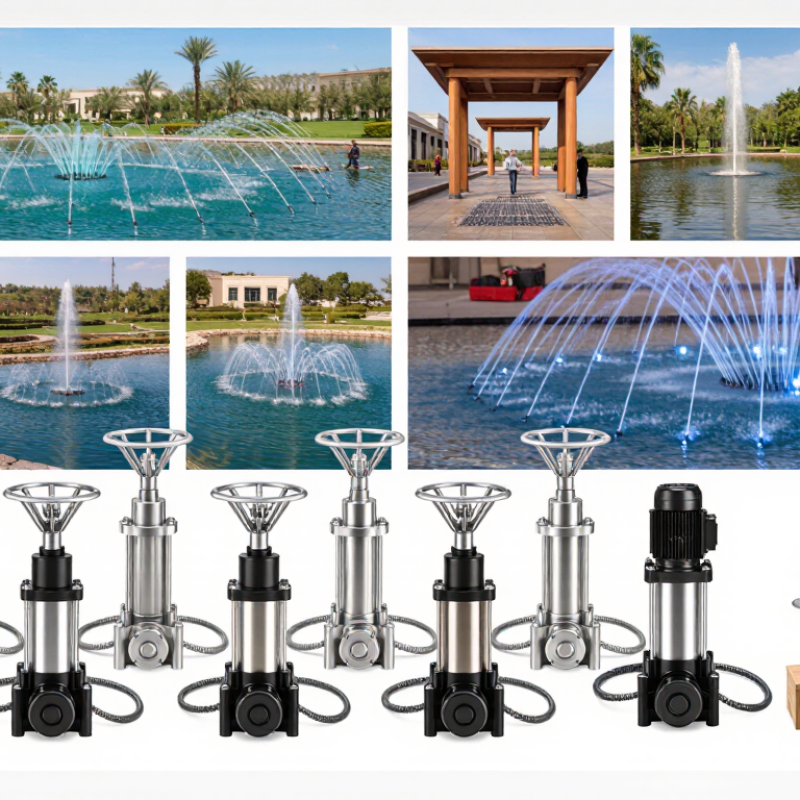
Top Display Fountain Aerator Suppliers in China

What Is a Display Fountain Aerator and How Does It Work?

A display fountain aerator is a floating or submerged device that mixes water with air. It usually combines a pump, intake screen, nozzle, and motor. The pump lifts water through the nozzle. Pressure then breaks the stream into droplets or a vertical plume. Air contacts these droplets before they return to the basin. This creates movement, white spray, and visible oxygen transfer.

The process improves circulation and can reduce stagnant zones near corners. However, appearance is not the same as treatment. The U.S. Department of Energy’s Pumping System Sourcebook estimates pumping can represent about 25% of industrial electricity use. This figure explains why motor efficiency matters, even in decorative installations. Flow rate, head height, nozzle shape, and operating hours control energy demand. ISO 9906 provides useful pump performance testing principles, but site conditions still change results. A beautiful plume may consume more power than expected.

Tips: Check flow and head data before choosing a supplier. Ask for measured noise, spray height, and power consumption. Inspect the intake screen weekly. Hard water can block small nozzles quickly. A variable-speed controller may reduce energy use, though it can weaken the plume. Do not trust catalogue images alone. Field testing remains imperfect, and wind can distort both spray height and oxygen readings.

Key Features That Define High-Quality Fountain Aerators

Top Display Fountain Aerator Suppliers in China

High-quality fountain aerators begin with stable water performance, not dramatic spray height. During equipment checks, I look for consistent flow, balanced rotation, and clean spray patterns. A reliable unit should maintain its shape when water levels change slightly. That detail matters in public displays. Stainless steel housings resist corrosion, while UV-resistant cables help protect outdoor installations. Strong seals are essential. Small leaks often become expensive maintenance problems.

Motor efficiency also deserves close attention. A well-designed aerator produces visible movement without excessive power use or noise. Ask suppliers for flow-rate data, operating voltage, protection ratings, and continuous-run test records. Practical suppliers should explain these figures clearly. Vague specifications are a warning sign. The best manufacturers usually provide sample testing, inspection reports, and replacement parts. Their technical teams can also adjust nozzles, lighting mounts, and control systems for different water depths.

Maintenance access defines long-term value. Removable screens, accessible impellers, and simple cleaning procedures reduce service time. I have seen attractive prototypes fail because debris blocked narrow inlets. That lesson stays with me. Design quality is more than appearance. Suppliers should inspect welding, cable connections, vibration, and insulation before shipment. Clear installation guidance improves reliability, although manuals are sometimes too general. A direct technical review can reveal problems before production begins.

How to Evaluate Display Fountain Aerator Suppliers in China

Top Display Fountain Aerator Suppliers in China

How to Evaluate Display Fountain Aerator Suppliers in China

A display fountain aerator must create a clear, stable pattern, not just move water. When evaluating suppliers in China, ask for nozzle dimensions, pump requirements, operating depth, and recommended flow rate. These figures help you check whether a proposed unit fits your pool and desired display. Look for product drawings and installation guidance, too. Small details matter.

Request a video or test record showing the aerator running under stated conditions. Check whether the supplier explains spray height, wind sensitivity, and water quality limits. A tall plume may look impressive indoors but behave differently outdoors. Ask how parts exposed to water are protected from corrosion, and whether replacement components are available. Get answers in writing.

Communication is part of the evaluation. A capable supplier should clarify unclear project details instead of simply confirming every request. Ask about lead times, packaging, inspection steps, and support during installation. If possible, speak with a previous customer about delivery and after-sales response. One polished sample is not enough. Supplier claims still need checking. Even a detailed datasheet cannot predict every site condition, so leave room for adjustments after a real water test.

Top Display Fountain Aerator Suppliers in China — How to Evaluate Display Fountain Aerator Suppliers in China

Use this comparison framework to assess shortlisted suppliers. The weightings are suggested procurement priorities, not published supplier ratings. Request project-specific evidence and compare quotations against the same fountain layout, operating conditions, and delivery terms.

Evaluation Dimension Weight What to Check Evidence to Request Practical Evaluation Guidance
Hydraulic and aeration performance 20% Rated flow, operating head, spray height and pattern, and the conditions under which performance is specified. Pump curves, nozzle data sheets, technical drawings, and test records identifying the pump, nozzle, and test conditions. Compare performance at the required flow and head, not by maximum spray height alone. Check whether the proposed pump and nozzle combination matches the project design.
Product configuration and controls 12% Available nozzle arrangements, pump options, lighting integration, control-panel functions, and compatibility with the fountain’s operating sequence. System schematic, component schedule, control description, and sample operating sequence or demonstration. Confirm which functions are included in the quotation and which require separate control, lighting, or automation equipment.
Materials and water compatibility 12% Materials used for wetted parts, fasteners, seals, and enclosures, selected for the water chemistry and installation environment. Bill of materials, material grades, component drawings, and written recommendations for the stated water conditions. Check corrosion suitability for the actual water and exposure conditions. Stainless-steel grade alone does not establish suitability for every water environment.
Electrical and ingress protection 12% Supply voltage and frequency, motor ratings, grounding, protection devices, cable arrangement, and enclosure protection for the installation location. Motor and panel nameplates, wiring diagrams, applicable test documentation, and enclosure IP-rating documentation where relevant. Verify compatibility with the destination country’s electrical supply and installation rules. IP ratings are defined under IEC 60529; confirm that the rating applies to the specified enclosure and installation.
Quality management and traceability 10% Documented production controls, inspection stages, component traceability, and handling of nonconforming products. Current quality-management certificates if claimed, inspection records, sample test reports, and corrective-action process. Check certificate scope, issuer, and validity. A management-system certificate is not, by itself, proof that a particular aerator model meets project requirements.
Customization and engineering support 10% Ability to review site drawings, confirm water depth and mounting details, and document project-specific changes. Design review comments, interface drawings, installation details, and a named technical contact for the project. Prefer written confirmation of design assumptions, exclusions, and required site conditions before production starts.
Testing and acceptance 8% Factory inspection, functional testing, packaging inspection, and agreed acceptance criteria for the supplied configuration. Inspection and test plan, sample factory test report, and agreed checklist for any pre-shipment inspection. Define the test scope and pass/fail criteria in the purchase order. Ask for results tied to the actual model or project configuration.
Warranty and after-sales service 8% Warranty duration and coverage, exclusions, spare-parts availability, response process, and technical support arrangements. Written warranty terms, recommended spare-parts list, service contact details, and procedure for handling claims. Compare coverage and remedies in writing; clarify who pays shipping, labor, and replacement costs for approved claims.
Export documentation and delivery 5% Export packing, shipping documentation, quoted Incoterms, production lead time, and delivery schedule assumptions. Quotation with named Incoterms® rule and place, packing details, draft document list, and production schedule. Compare quotations on the same delivery basis. Incoterms® rules allocate specified delivery responsibilities and costs; they do not replace the sales contract.
Commercial clarity and total cost 3% Itemized pricing, included accessories, payment milestones, quotation validity, and clearly stated exclusions. Itemized quotation, payment schedule, list of included components, and written list of optional items. Compare the complete supplied system and expected operating requirements rather than the headline unit price alone.
Suggested total weighting 100% Score each shortlisted supplier against documented evidence using the same requirements and scoring method.

Suggested scoring method: rate each dimension from 1 (insufficient evidence or poor fit) to 5 (strong, verified fit), multiply the rating by its weighting, and retain the supporting documents with the comparison. Confirm all technical, regulatory, and commercial requirements for the destination market and project before ordering.

Leading Supplier Categories and Their Product Specialties

Top Display Fountain Aerator Suppliers in China

Chinese suppliers of display fountain aerators generally fall into several practical categories. Integrated fountain system manufacturers combine pumps, floating platforms, nozzles, lighting, and control cabinets. They suit projects that need coordinated water patterns, such as a broad fan or a steady central plume. Their strength is system matching, though buyers should check which components are made in-house.

Aerator-focused manufacturers concentrate on floating units, motors, impellers, and spray assemblies. Some specialize in compact equipment for ponds, while others build larger units for reservoirs or public landscapes. Ask for flow and head data, recommended water depth, and details on screens or intake protection. Small details matter. A clogged intake can spoil an otherwise attractive display.

Pump and motor suppliers may offer dependable core equipment but less help with choreography or installation. Export-oriented trading companies can source several product types and assist with packing and shipping. Their technical depth varies. In practice, categories overlap, and a polished catalog does not prove field experience. Request a recent test video, parts list, and clear warranty terms. A sample run in water is useful, but site conditions can still change the final spray height and shape.

Ordering, Customization, Quality Control, and Export Considerations

When comparing display fountain aerator suppliers in China, describe the water effect, pond dimensions, and operating schedule. Share the required spray height and nozzle pattern, plus pump voltage and local power frequency. These details help suppliers recommend a suitable aerator instead of guessing from a photo. For custom work, confirm materials, cable length, lighting options, and whether replacement parts can be ordered later. A small change in nozzle size can alter the whole display.

Ask for a written quotation with product specifications, sample or inspection options, production time, and packaging details. Quality control should include checks for motor operation, seals, vibration, and corrosion-resistant parts. Request photos or test records for the finished unit, not only a catalog image. One detail buyers sometimes miss is the control system; it may need testing with the site’s actual timer or lighting setup. Export arrangements also deserve clear confirmation, including carton dimensions, shipping terms, and documents required by the destination market. Details can still be missed, so review the final specification carefully.

Tips: Send a short video of the installation site and mark water depth on a drawing. Keep one approved sample or signed specification for comparison. Before shipment, verify labels, spare parts, and packing protection. A neat quotation is useful, but it is not a substitute for a real performance test.

Top Display Fountain Aerator Suppliers in China

Suggested weighting for evaluating ordering, customization, quality control, and export readiness.

These percentages are an illustrative buyer-side planning model, not measured supplier performance or market-survey results. Confirm product specifications, inspection procedures, shipping terms, and documentation directly with each supplier.

FAQS

What technical information should I request from a display fountain aerator supplier?

Request nozzle dimensions, pump requirements, operating depth, and recommended flow rate. These figures show whether the unit fits your pool. Ask for product drawings, too.

Why is a test video important when evaluating an aerator?

A video should show the aerator running under stated water conditions. Check the spray height, pattern stability, and visible turbulence. One polished sample is not enough.

How can I assess outdoor performance?

Ask how wind affects the plume and whether water quality changes performance. Indoor demonstrations may look better than outdoor operation. Leave room for adjustment.

Which supplier type suits a complete fountain project?

An integrated manufacturer may combine pumps, floating platforms, nozzles, lighting, and controls. This can simplify system matching. Confirm which parts are produced in-house.

What should I check with an aerator-focused manufacturer?

Ask about motors, impellers, spray assemblies, flow data, and water depth. Check intake screens or other protection against debris. Small details matter.

Can a pump and motor supplier provide everything needed?

Such suppliers may offer dependable core equipment but limited installation or pattern guidance. Confirm whether they understand choreography and site setup. Technical support may be incomplete.

What communication habits suggest a capable supplier?

A capable supplier should question unclear project details instead of agreeing automatically. Request written answers about lead times, packaging, inspections, and installation support. Ask for evidence.

How should I evaluate warranty and after-sales support?

Request clear warranty terms, replacement-part availability, and response procedures. Speak with a previous customer if possible. Claims can still fail in real projects.

Conclusion

Display Fountain Aerators combine pumps, nozzles, and control systems to create decorative water displays while supporting water circulation. Their performance depends on factors such as flow rate, spray height, energy efficiency, materials, and ease of maintenance. Understanding how these components work helps buyers choose equipment that suits the fountain’s size, visual effect, and operating conditions.

This guide explains how to evaluate Display Fountain Aerators suppliers in China by reviewing their technical capabilities, product range, quality-control processes, communication, and after-sales support. It also outlines common supplier categories and their specialties, from standard units to customized systems. Before ordering, buyers should confirm specifications, discuss customization requirements, request clear quality checks, and plan packaging, documentation, and shipping details for export.

Charlotte

Charlotte

Charlotte is a professional marketing specialist who helps customers understand the company’s products and the value they can bring to everyday business needs. With a strong knowledge of the product range, she turns technical details into clear, practical information, helping readers compare......