
Winter docking is no longer a simple seasonal maintenance task. Ice can lock ladders, stress pilings, damage shore power, and delay loading schedules within hours. For global buyers, Dock Mount De-Icers must be evaluated against water movement, air temperature, salinity, dock design, and local energy costs.
NOAA Great Lakes Environmental Research Laboratory records show that ice cover varies sharply between winters. That variability complicates purchasing decisions. A system sized for mild conditions may fail during a sudden freeze. An oversized unit may waste electricity and create unnecessary water disturbance. Small details matter, including cable protection, thermostat accuracy, mounting depth, and access for cleaning.
Dr. Donald Perovich, a respected sea-ice researcher, has stated, “Sea ice is not a simple material.” That warning applies to dock equipment, too. Ice behaves differently around freshwater marinas, tidal harbors, and sheltered industrial berths. The U.S. Army Corps of Engineers also treats ice as a serious navigation and infrastructure factor in northern waterways.
This guide compares ten Dock Mount De-Icers for international buyers. It considers heating performance, installation practicality, operating efficiency, corrosion resistance, and support availability. Certifications still require local verification. Product claims should not replace site testing or an engineer’s review. That may sound cautious, but winter failures are expensive. A quiet motor and compact housing mean little if the unit cannot keep a clear water pocket around a working dock.
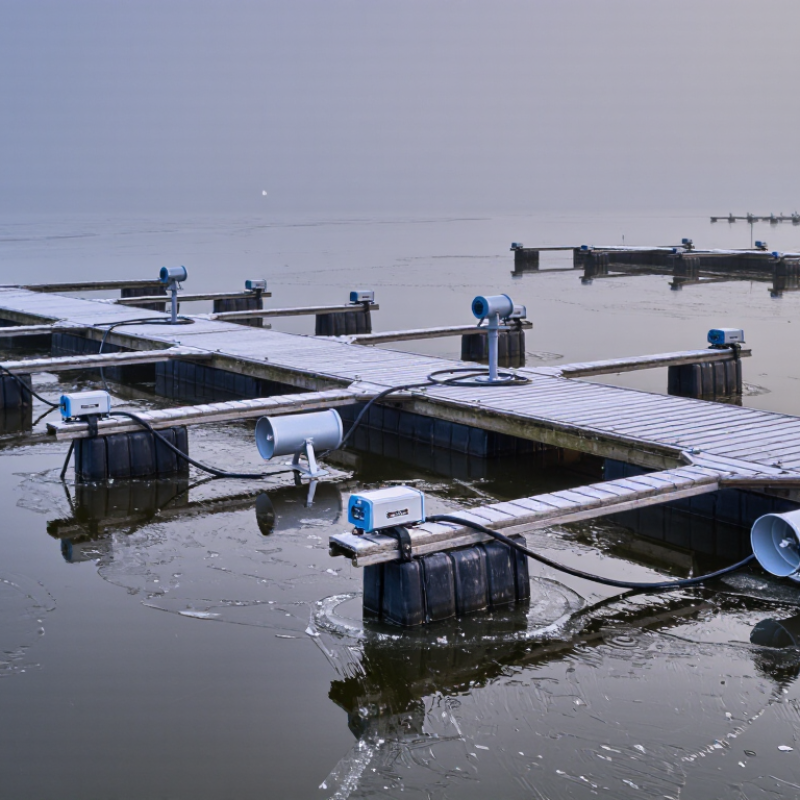
A dock-mount de-icer is a device that helps keep water moving around a dock during freezing weather. It is usually secured to a dock post or a nearby structure, with its motor and propeller positioned underwater. The propeller pushes water upward or outward, bringing relatively warmer water from below toward the surface. This circulation can slow ice formation near pilings, boats, and access points. It does not melt every sheet of ice or warm an entire harbor.
Its effectiveness depends on water depth, current, wind, and the size of the area you want to protect. A poorly aimed flow may move water without protecting the vulnerable side of a dock.
Installation also matters: the unit needs a secure mount, suitable clearance, and a power supply rated for the site’s conditions. A professional assessment can help identify risks, especially around electrical connections and changing water levels. The term “de-icer” can be misleading; performance is not guaranteed in severe cold.
Tips: Check the manufacturer’s operating guidance and inspect the mount before winter. Keep the propeller clear of ropes, weeds, and debris. Start the unit before heavy ice forms, when practical. Watch the protected area during changing weather. Small adjustments may help, but every shoreline behaves a little differently.
For a dock-mount de-icer, compare circulation pattern, motor power, depth range, and mounting options—not horsepower alone. NOAA’s Great Lakes Environmental Research Laboratory reports average annual maximum ice cover of roughly 53% across its satellite record, with substantial year-to-year variation. That variability matters: a sheltered slip and an exposed dock may need different circulation, even at similar depths. Check whether the unit can aim flow beneath the dock and keep water moving around pilings, not just clear a neat circle beside the propeller.
Look closely at motor sealing, corrosion-resistant materials, thermal protection, and the specified operating depth. A stainless-steel shaft can help, but it does not make every connection saltwater-proof. Ask for documented flow or thrust data, seasonal energy use, and compatible thermostatic controls; compare these with local electricity costs and winter conditions. The U.S. Army Corps of Engineers’ Ice Engineering manual explains how ice conditions and structural exposure affect ice forces, so dock layout deserves attention too. Quiet operation matters near homes. So does service access. Some specifications look impressive on paper, yet real results depend on wind, water depth, and placement. A clear installation diagram is useful, though it cannot replace observing the site before purchase.
Choosing among the top dock-mount de-icers starts with the dock, not the catalog. Measure water depth, exposed shoreline, and the distance between pilings. A unit that suits a sheltered freshwater slip may perform differently in a tidal marina or a windy lake. Ask suppliers for flow direction, recommended operating depth, mounting range, and motor specifications. Small details matter.
For international purchasing, confirm the available voltage and frequency before comparing prices. Check whether the mounting hardware fits your dock structure and whether wetted components are suited to your water conditions. Corrosion resistance is important in brackish or salt water, but material names alone do not prove long-term durability. Request written specifications and clarify what routine inspection involves. Check the fit.
A practical shortlist should compare circulation pattern, power use, installation access, and service support—not just advertised coverage. Look for clear guidance on positioning, since nearby boats, pilings, and changing currents can affect water movement. Keep cords and controls away from traffic and follow qualified installation advice. One point is easy to overlook: a de-icer can reduce ice buildup near a dock, but conditions vary, and no single setup suits every site. A local assessment may prevent an expensive mismatch.
Choosing a dock mount de-icer starts with the water, not the equipment list. A sheltered freshwater slip may need modest circulation, while a windy shoreline with steady current can lose heat quickly. Watch where ice forms first: around pilings, beneath a swim platform, or along the hull. Small details matter. Water depth, dock layout, and the direction of prevailing winds all affect how well warm water circulates.
Match the unit’s capacity and mounting position to the area you need to protect. A poorly aimed flow can leave a quiet pocket of ice beside an otherwise open berth. For floating docks, check how the mount handles changing water levels and movement. In saltwater or brackish locations, confirm that materials and maintenance guidance suit the exposure. A de-icer reduces ice buildup; it does not guarantee an ice-free dock in every storm.
Power supply deserves equal attention. Confirm that the electrical setup, grounding, and protective devices are appropriate for wet outdoor use, and ask a qualified electrician when uncertain. Follow the manufacturer’s clearance and installation instructions, especially near boats and dock structures. One judgment call remains: buyers sometimes choose extra capacity for peace of mind, but more output is not automatically better. Compare the site conditions with documented performance, then reassess after the first cold spell. That is not enough. A changing current or a new obstruction may require repositioning.
Choosing a dock-mount de-icer starts with the dock, not the catalog. Measure water depth, prevailing wind, and the spots where ice forms first. Check the mounting surface for rot, loose fasteners, and changing water levels. Placement matters. A poorly aimed unit can move water away from the slip you want to protect. Confirm voltage, frequency, and connection requirements before ordering across borders. Ask a qualified electrician to install the supply and verify suitable ground-fault protection for the site.
Keep power cables clear of walking areas and protected from abrasion, standing water, and moving dock hardware. Follow the unit’s operating instructions; moving water can create thin ice or open water near the dock. Mark that area clearly. Before inspection, disconnect power using the prescribed method. Check fasteners, guards, and visible cables regularly, and remove weeds or debris only as directed. A missed inspection is easy to regret after the first hard freeze.
Operating cost depends on rated wattage, actual run time, and the local electricity rate. Estimate energy use by multiplying kilowatts by operating hours, then by the rate per kilowatt-hour. A timer or thermostat may reduce unnecessary operation, but site conditions still matter. Keep a simple weekly log of run time and ice coverage. It will not predict every cold snap, but it can reveal whether the setup is working harder than expected.
Estimated electricity costs are calculated from nominal motor power using 0.746 kW per horsepower, 8 operating hours per day, 120 days per season, and an electricity rate of $0.15 per kWh. These are generic power-rating tiers, not product or brand comparisons. Actual costs depend on runtime, local electricity rates, and operating conditions; installation, safety, and maintenance costs are not included.
Measure water depth, shoreline exposure, and spacing between pilings. Note where ice forms, such as beneath a platform or beside a hull.
No. A sheltered freshwater slip differs from a windy shoreline or tidal marina. Conditions vary.
Match the flow direction to the area needing protection. Nearby boats, pilings, and currents can block circulation. Check the fit.
Confirm that the mount accommodates changing water levels and dock movement. Recheck its position after conditions change.
Ask for written material specifications and maintenance guidance for your water conditions. A material name alone does not prove long-term durability.
Check voltage and frequency before comparing prices. Have a qualified electrician assess grounding and protective devices for wet outdoor use.
No. It can reduce ice buildup, but severe weather and changing currents may still leave ice. That distinction matters.
Not necessarily. Compare documented performance with your site conditions, then reassess after the first cold spell. I may be judging this too cautiously, but more output is not automatically better.
Dock Mount De-Icers help keep water around docks open during cold weather by moving warmer water upward and limiting ice formation. This overview explains how these systems work and compares the features buyers should consider, including heating capacity, energy use, durability, adjustability, and suitability for different water and weather conditions. It also presents ten types of Dock Mount De-Icers for global buyers, focusing on practical differences rather than brand names.
Choosing the right unit depends on dock size, water depth, exposure to wind and currents, and the severity of local winters. The guide also covers basic installation considerations, safe operation, routine maintenance, and ongoing costs. Together, these points can help dock owners assess their needs, plan for reliable seasonal performance, and select a de-icing solution that fits their site and budget.