
Family-Owned Manufacturer · Holland, Michigan, USA · Since 1963 Customer Service: +1-616-355-2451
0%

What Are Floating AquaSweep Muck Blasters?

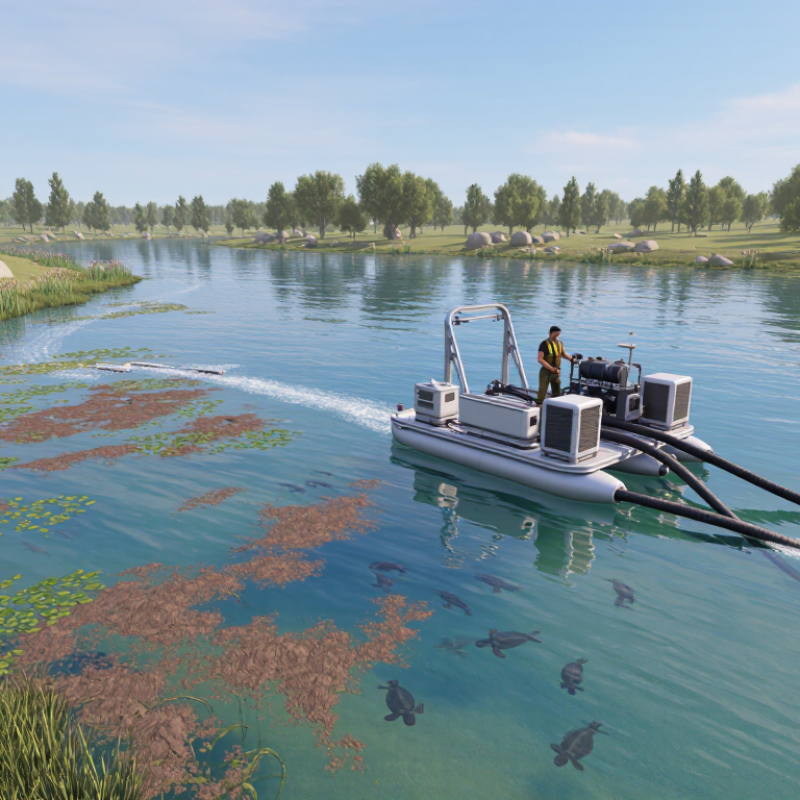
Floating AquaSweep Muck Blasters are specialized surface-cleaning systems designed to remove floating debris, organic sludge, and loose sediment from ponds, lakes, canals, and retention basins. Their floating platforms use pumps, intake screens, skimmer arms, or suction equipment to collect unwanted material without draining the entire water body. The exact design can vary widely. That detail matters.

Dredging engineer Dr. Robert E. Randall has expressed a principle that fits this technology: “Effective dredging begins with understanding the material, the water, and the purpose of the work.” This view encourages operators to inspect muck depth, water movement, oxygen conditions, and nearby habitats before choosing equipment. A machine that works well in a shallow ornamental pond may struggle in a deep reservoir with compacted sediment.

In practical use, Floating AquaSweep Muck Blasters can reduce surface buildup, improve water circulation, and make maintenance more controlled. Operators may guide the unit along a shoreline, collect floating vegetation, or target concentrated muck near an inlet. Performance still depends on maintenance. Clogged screens and overloaded collection chambers can quickly reduce efficiency.

The term “muck blaster” sounds forceful. The process should not be.

Responsible teams use gradual removal, careful discharge handling, and documented inspections. Results also deserve honest evaluation. Cleaner-looking water does not always mean healthier water. Sediment testing, ecological observation, and follow-up measurements provide stronger evidence. Even experienced operators can misjudge a site. That uncertainty should shape the plan, not be hidden.
What Are Floating AquaSweep Muck Blasters?

Definition and Purpose of Floating AquaSweep Muck Blasters

Floating aqua-sweep muck blasters are floating machines designed to loosen, move, and collect soft sediment in ponds, canals, and shallow waterways. They usually combine a buoyant platform, rotating heads, suction lines, or conveyor systems. Their purpose is practical: reduce accumulated muck without draining the entire water body. Operators can guide the unit across muddy zones while keeping much of the surrounding water in place.

Muck often contains decayed leaves, fine soil, algae, and organic debris. When disturbed, it may release unpleasant odors or cloud the water. A controlled removal process can improve water depth, circulation, and visibility. It may also support safer inspection around docks and drainage areas. However, the equipment is not a magic solution. Performance depends on sediment thickness, water depth, weather, and the disposal method. That part is easy to overlook.

Field experience suggests that slow passes usually produce more consistent results than aggressive cutting. Operators should inspect the site before work begins and monitor turbidity during operation. Local water-management requirements may also affect where removed material can go. The name sounds powerful. The machine still has limits. Some stubborn sediment may require repeated treatment, and poorly planned movement can spread muck instead of removing it. Careful records, clear measurements, and post-work inspection make the process more reliable.

What Are Floating AquaSweep Muck Blasters?

Floating muck blasters are water-surface or floating-platform systems designed to collect floating debris, agitate settled organic material, and help remove accumulated muck from ponds, lagoons, and other water bodies.

How to read the chart: Floating collection works best for materials less dense than water, such as leaves, oils, and some plastic debris. Mineral sediment is much denser and normally requires agitation, suction, or pumping rather than flotation alone. Actual muck density varies because muck is a mixture of water, organic matter, and mineral particles.

Key Components and How the System Works

What Are Floating AquaSweep Muck Blasters?

Key Components and How the System Works

Floating AquaSweep Muck Blasters are compact water-management systems designed to remove soft sediment, organic sludge, and floating debris from ponds or enclosed waterways. Their floating frame keeps the equipment stable while working near the surface. This matters because uneven water levels can change the machine’s angle and cleaning performance.

The system usually includes pontoons, an intake head, a protective screen, a suction or agitation pump, and a discharge hose. The intake head loosens trapped muck from the bottom. Water then carries the loosened material through the pump and hose toward a settling area or approved collection point. Screens help limit larger debris, although they still need frequent checking. Small branches can block the intake quickly.

Operators often adjust the pump rate, hose position, and float spacing for each site. Thick organic layers behave differently from fine silt. A slow pass may work better than aggressive agitation because it reduces clouding. In field use, clear water does not always mean the bottom is clean. That assumption can lead to incomplete work.

Weather also affects control. Wind can push the platform toward shallow edges, while sudden waves disturb the intake. Experienced operators monitor depth, visibility, discharge flow, and nearby aquatic life throughout the process. The setup is practical, but not effortless. Performance depends on sediment type, water depth, access, and careful adjustment.

Types of Muck Removed from Aquatic Environments

What Are Floating AquaSweep Muck Blasters?

Floating muck blasters are surface-cleaning systems designed to collect soft deposits from ponds, lakes, canals, and stormwater basins. Their work is less dramatic than the name suggests. A floating intake, screen, or suction head moves through shallow water and separates loose material before discharge or dewatering.

The removed muck usually falls into four practical categories. Organic muck contains decomposed leaves, plant fragments, and dark, oxygen-poor sludge. Fine mineral sediment includes silt and clay carried by runoff. Algae-rich floc forms when blooms collapse and settle near the bottom. A fourth category is mixed sediment, where organic matter combines with road dust, soil, and urban debris. Each type needs different testing and handling.

The U.S. Environmental Protection Agency’s National Lakes Assessment 2017 examined 1,038 lakes across the country and linked poor biological condition with factors such as excess nutrients and human disturbance. Nutrient-rich muck can therefore act like a hidden reservoir. Removing it may reduce internal nutrient recycling, but only when the deposit is targeted correctly. That distinction matters.

Field work is messier than diagrams suggest. Thick organic sludge can clog screens, while compacted clay may resist light suction. Sediment testing should precede removal, especially near developed shorelines. The U.S. Geological Survey also reports that suspended sediment can transport nutrients and other pollutants through watersheds. A floating system may remove the visible layer, but it cannot repair every source upstream. That limitation deserves more attention.

What Are Floating AquaSweep Muck Blasters? — Types of Muck Removed from Aquatic Environments
Muck Type Main Composition Common Sources Typical Appearance and Behavior Primary Environmental Concern Common Removal Approach Relative Management Priority
Fine Mineral Sediment Clay, silt, and very fine sand particles Soil erosion, stormwater runoff, construction sites, and disturbed shorelines Gray, tan, or reddish-brown material that settles slowly and can remain suspended after disturbance Reduced water clarity, blocked fish spawning habitat, and burial of bottom-dwelling organisms Mechanical collection, sediment removal, erosion control, and upstream settling areas Moderate
Organic Leaf and Plant Debris Decomposing leaves, stems, roots, branches, and other plant fragments Autumn leaf fall, shoreline vegetation, aquatic plant dieback, and storm events Dark brown material with visible plant fragments; often forms soft deposits along edges and in sheltered areas Oxygen depletion during decomposition and accelerated accumulation of bottom material Surface skimming, floating debris collection, raking, and controlled organic-material removal Moderate
Algal Biomass Living or decomposing algae, including filamentous and planktonic forms Excess nutrients, warm water, sunlight, and slow water circulation Green, olive, or brown mats, clumps, or surface films that may accumulate near shorelines Nighttime oxygen loss, unpleasant odors, reduced light penetration, and possible toxin exposure from harmful algal blooms Targeted skimming, biomass removal, nutrient-source reduction, and circulation improvement High when harmful blooms are suspected
Decomposed Organic Sludge Partially degraded plant and animal matter mixed with fine sediment and water Long-term accumulation in stagnant zones, nutrient enrichment, and limited water exchange Very soft, dark gray to black material with a strong sulfur-like odor when disturbed Low dissolved oxygen, release of nutrients, odor problems, and deterioration of benthic habitat Controlled dredging, suction removal, dewatering, and safe disposal or beneficial reuse where permitted High
Floating Aquatic-Weed Fragments Detached stems, leaves, roots, and stolons from aquatic plants Plant trimming, storms, boat traffic, natural dieback, and invasive-plant spread Green or brown fragments that drift with wind and currents and may form dense surface accumulations Reduced navigation, shading of native plants, habitat disruption, and potential spread of invasive species Floating barriers, skimmers, manual collection, and disposal that prevents regrowth High for invasive species
Animal-Derived Organic Matter Fish waste, waterfowl droppings, dead organisms, and other animal residues Waterfowl congregation, fish kills, aquaculture activity, and wildlife activity Localized dark deposits or floating material; may produce visible solids and strong odors Elevated nutrients, bacterial growth, oxygen consumption, and possible pathogen concerns Prompt removal of visible material, source management, aeration, and sanitary handling High when decomposition is active
Road and Urban Runoff Residue Fine sediment mixed with tire wear particles, litter fragments, oil residues, and road dust Urban drainage, parking areas, roads, industrial yards, and heavy rainfall Dark gray or black material that settles near inlets, outfalls, and sheltered shoreline areas Potential contamination by hydrocarbons, metals, microplastics, and other urban pollutants Skimming for floating solids, sediment capture, stormwater treatment, and regulated disposal when required High where contamination is documented
Mixed Shoreline Litter and Floating Debris Leaves, twigs, plastic fragments, food packaging, foam, and other buoyant materials Wind, stormwater, recreational use, boating, and illegal dumping Visible floating or shoreline accumulations that vary widely in color, size, and density Wildlife entanglement or ingestion, visual pollution, and fragmentation into smaller particles Floating collection, manual sorting, litter interception, recycling, and appropriate waste disposal Moderate to High
Contaminated Sediment Fine sediment containing elevated concentrations of metals, hydrocarbons, pesticides, or other pollutants Historic industrial activity, mining, harbors, wastewater discharges, and polluted runoff Often visually similar to ordinary sediment; contamination must be confirmed through sampling and laboratory analysis Potential toxicity to aquatic organisms and restrictions on handling, transport, and disposal Site assessment, laboratory testing, engineered dredging, containment, and regulated disposal High

Typical Applications in Ponds, Lakes, and Waterways

Floating AquaSweep muck blasters are compact surface-cleaning systems designed for ponds, lakes, and slow-moving waterways. They use a floating platform, intake head, conveyor, or suction mechanism to collect muck, algae, leaves, and loose aquatic vegetation. Operators can work near shorelines, swimming areas, stormwater basins, and marinas without draining the waterbody. The equipment is especially useful where soft sediment accumulates beneath docks or along shallow banks. Quiet operation matters in public parks.

The U.S. Environmental Protection Agency’s 2017 National Lakes Assessment found poor phosphorus conditions in roughly one-fifth of assessed lakes. That finding explains why targeted removal can support broader nutrient-management plans. However, a muck blaster does not solve every water-quality problem. It cannot replace watershed controls, erosion prevention, or properly designed sediment studies. Field crews should inspect water depth, bottom firmness, dissolved oxygen, and disposal access before operating. One overlooked detail can delay the entire project.

In ponds, crews often remove decaying organic matter from fishing edges and irrigation intakes. In larger lakes, floating systems can clear narrow channels, coves, and recreational launch zones.

Waterway managers may also use them after storms, when floating debris gathers against bridges or inlet structures. The U.S. Army Corps of Engineers emphasizes site-specific evaluation for sediment removal projects because material properties vary widely. Results can be uneven. Monitoring before and after treatment gives managers evidence, not assumptions.

Maintenance, Safety, and Environmental Considerations

What Are Floating AquaSweep Muck Blasters?

Maintenance, Safety, and Environmental Considerations

Floating AquaSweep muck blasters are compact waterway machines designed to collect floating debris, loose vegetation, and surface sludge. Their rotating brushes or suction heads move slowly across ponds, canals, and marinas. Operators should inspect screens, pontoons, cables, and drive units before every shift. A blocked intake can overload the pump quickly. Small faults become expensive problems.

Safety needs constant attention. Keep people away from moving parts and establish a visible exclusion zone around the machine. Workers should wear flotation devices near open water, even during short inspections. The U.S. Bureau of Labor Statistics recorded 87 fatal occupational injuries involving water transportation in 2023. That figure shows why rescue planning cannot be optional. Weather matters too. Strong wind can push a floating unit into banks, docks, or swimmers.

Environmental control is equally important. UNEP’s From Pollution to Solution report estimates that about 11 million metric tonnes of plastic enter aquatic ecosystems annually. Removing debris helps, but careless operation may disturb sediment, fish habitat, or nesting areas. Collected muck should be dewatered and tested before disposal. Never assume it is harmless. NOAA guidance also supports reducing land-based debris at its source.

Tips: Log daily inspections, measure turbidity before and after work, and stop operations when visibility drops. Use low-speed settings near habitat zones. Review the plan afterward. Some “cleanups” may move pollution rather than remove it.

FAQS

What are floating muck-removal systems used for?

They remove soft sediment, organic sludge, floating debris, and loose vegetation from enclosed waterways. They work in ponds, canals, lakes, and stormwater basins.

How does the equipment remove sediment?

A floating intake loosens bottom muck. A pump moves the material through a hose toward a settling or approved collection area.

What components does the system usually include?

Common parts include pontoons, an intake head, protective screens, a pump, and a discharge hose. Each part needs regular inspection.

What types of muck can these systems remove?

They can handle decomposed leaves, plant fragments, fine silt, clay, algae-rich deposits, and mixed urban sediment. Materials behave differently.

Why should operators adjust the cleaning speed?

Thick sludge may need a slow pass. Aggressive agitation can create cloudy water and disturb nearby habitat.

Does clear water prove the bottom is clean?

No. Clear water may hide remaining sediment below the surface. I might underestimate the deposit without checking depth and visibility.

What safety measures are important during operation?

Keep people away from moving parts and mark an exclusion zone. Workers near open water should wear flotation devices.

How can operators reduce environmental disturbance?

Use low-speed settings near habitat areas. Monitor turbidity, weather, discharge flow, fish activity, and nesting locations.

How should collected muck be handled?

Dewater and test the material before disposal. It may contain nutrients, pollutants, or urban debris. Never assume it is harmless.

What maintenance should happen before each work shift?

Inspect screens, pontoons, cables, drive units, hoses, and intake openings. Small faults spread. Record the inspection and review the plan afterward.

Conclusion

Floating AquaSweep Muck Blasters are floating aquatic systems designed to remove accumulated muck, sediment, and organic debris from ponds, lakes, canals, and other waterways. By combining a stable floating platform with pumps, intake equipment, agitation tools, and collection or discharge components, the system loosens material from the bottom and transports it away for controlled handling. This helps improve water depth, circulation, clarity, and the overall condition of aquatic environments.

These systems can target soft mud, decomposed leaves, algae-related buildup, organic sludge, and fine sediment. They are commonly used for pond restoration, lake maintenance, shoreline management, and waterway cleanup. Proper operation requires routine inspection, cleaning of filters and pumps, checking hoses and flotation supports, and following safe procedures around moving equipment and open water. Environmental considerations are also important, including minimizing disturbance to habitats, managing removed material responsibly, and avoiding unnecessary impacts on aquatic plants and wildlife.

Amelia

Amelia

Amelia is a professional marketing specialist with a deep understanding of the company’s products, their features, and the needs they are designed to serve. She regularly contributes expert articles to the company website, offering clear, practical insights that help readers make informed decisions......