
Commercial RGB LED Light Sets can turn a storefront, event space, or hospitality venue into a more inviting environment. Their adjustable colors help businesses match seasonal displays, brand palettes, and changing event themes without replacing an entire lighting setup. A warm amber wash can soften a restaurant entrance, while brighter color accents can draw attention to a display window. Small changes matter.
Choosing a set involves more than comparing color options. Consider the installation area, desired brightness, control method, and how the lights will be used each day. For outdoor applications, check the product’s stated weather-resistance rating and follow the manufacturer’s installation guidance. For indoor displays, think about glare, viewing distance, and whether the colors appear consistent across multiple fixtures. Practical details make a difference.
Commercial RGB LED Light Sets may also offer programmable scenes, dimming, or timed operation, but features vary by product. Confirm compatibility with the intended controller before purchasing, and review power requirements, cable lengths, and warranty terms. These checks can prevent frustrating surprises during installation. Even a well-reviewed set may not suit every space; wall color, ambient light, and fixture placement can change the result. It is worth testing a sample layout before committing to a larger installation. The best choice is not necessarily the brightest or most feature-packed option. It is the set that delivers reliable, controllable lighting for the space, with manageable installation and maintenance needs.
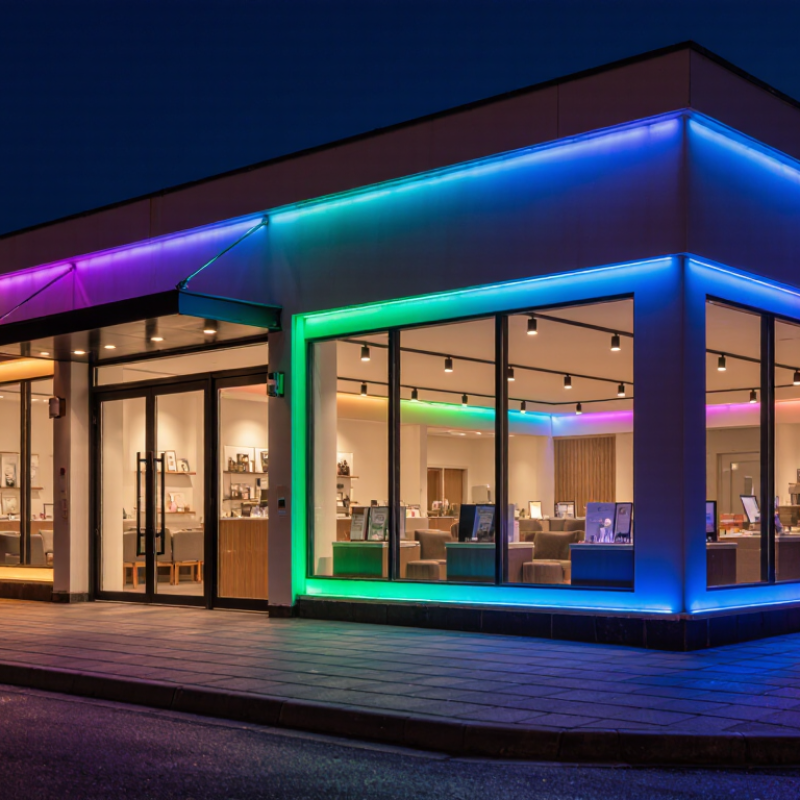
Commercial RGB LED light sets are complete lighting systems designed for demanding spaces, not just decorative bulbs. A typical set includes RGB LED fixtures, a controller, power supplies, cables, connectors, and mounting hardware. RGB means red, green, and blue diodes combine to create many colors. The controller adjusts brightness, color balance, timing, and sometimes zone control. In a retail display, this may produce a soft blue background. In a restaurant, warmer tones can support a more relaxed atmosphere. In practical installations, compatibility matters more than impressive color claims. Voltage, wattage, connector type, heat control, and weather protection should match the site.
Tips: Measure the installation area carefully. Leave space for ventilation. Test one complete section before installing the full system. A small color difference between fixtures can become obvious across a long ceiling. Also, do not hide the controller where maintenance becomes difficult. This mistake is common and expensive to correct.
Commercial sets are chosen for consistency, repeatable control, and easier maintenance. A reliable system should deliver even brightness without visible flicker during normal use. Check technical documents for color accuracy, operating temperature, ingress protection, and expected service life. In outdoor settings, sealed housings and protected connections are essential. Still, no system is perfect. Dust, heat, poor cable planning, or incorrect power sizing can reduce performance. A professional installer should verify the load and inspect connections before regular operation. Good lighting should look intentional, while the hardware stays safely out of sight.
RGB LED technology creates color through additive mixing. Each light contains red, green, and blue diodes. These primary colors combine to produce many visible shades.
The controller adjusts each diode’s intensity through rapid pulse-width modulation. A stronger red channel produces warmer tones. Balanced red, green, and blue light can appear white to the eye. However, this white may look less natural than light from dedicated white LEDs. That limitation deserves attention.
Commercial RGB sets use calibrated controls for repeatable color across multiple fixtures. This matters in retail displays, event spaces, and architectural installations.
Without calibration, two lights may show slightly different blues. Small differences become obvious across a long wall.
Diffusers soften bright diode points. Heat management protects output and supports longer service life. I have found that even color coverage depends on spacing, surface texture, and viewing distance. A glossy surface can reveal uneven blending. A matte surface usually hides it better.
Modern controllers can store scenes, fade between colors, and respond to scheduled changes. Still, more features do not guarantee better lighting. Poor wiring, weak power supplies, or incorrect voltage can reduce performance. Testing one complete section before installation is a practical safeguard. It can reveal problems early.
Why Choose Commercial RGB LED Light Sets?
Key Advantages of Commercial-Grade Light Sets
Commercial-grade RGB LED light sets are built for demanding spaces, not occasional decoration. They often use stronger housings, protected connectors, and better thermal control. These details matter in restaurants, event venues, retail displays, and outdoor installations. A stable system should maintain color quality after many hours of operation. Flicker, uneven brightness, and loose connections can quickly damage a professional presentation.
In real installations, consistent performance is one of the biggest advantages. Higher-quality LED sets usually offer smoother dimming and more accurate color mixing. They can also support scheduled scenes, centralized controls, and flexible zoning. This helps staff adjust lighting without reaching behind fixtures. Many commercial sets include weather-resistant protection, but ratings must match the actual environment. A covered patio is not the same as an exposed rooftop. I have seen installers trust a rating too quickly. That small assumption can create expensive maintenance later.
Tips: Check the connector type, cable length, heat ventilation, and control compatibility before installation. Leave space around power components. Test every color at full brightness. It reveals weak connections. Keep spare connectors available, because even durable equipment can fail during busy events. Maintenance records also help identify repeated issues, although they are often ignored. A practical lighting plan should include replacement access, cleaning schedules, and safe load limits. Overlooking these basics remains surprisingly common.
A practical comparison of common commercial-grade and consumer-grade RGB LED light set characteristics
| Evaluation Dimension | Commercial-Grade RGB LED Light Sets | Typical Consumer-Grade Light Sets |
|---|---|---|
| Intended operating environment | Designed for retail displays, hospitality areas, event venues, architectural accents, and other frequent-use installations. | Generally intended for occasional residential, decorative, or temporary use. |
| Expected LED service life | Often specified at approximately 30,000–50,000 operating hours when operated within rated temperature and electrical limits. | Commonly rated around 15,000–30,000 hours, depending on construction, thermal management, and operating conditions. |
| Continuous-use capability | Better suited to extended daily operation because of more robust power supplies, wiring, connectors, and heat dissipation. | May require shorter operating periods or additional cooling during prolonged use. |
| Ingress protection | Outdoor versions are commonly available with ratings such as IP65 or higher; the exact rating should be verified for each component. | Indoor-only products are common, while outdoor models may offer lower or component-specific protection. |
| Color control | Typically supports RGB or RGBW color mixing, dimming, preset scenes, scheduling, and synchronized effects through wired or wireless control systems. | Usually provides basic color selection, preset effects, and app or remote control with fewer integration options. |
| Color consistency | More consistent output is achievable through matched LED bins, calibrated controllers, stable drivers, and controlled installation practices. | Color uniformity may vary more between sections, production batches, or replacement pieces. |
| Construction and connectors | Often uses thicker cable, reinforced housings, locking or weather-resistant connectors, and mounting accessories for permanent or semi-permanent installation. | Usually uses lighter cable, simpler connectors, and mounting hardware intended for temporary or low-stress applications. |
| Power efficiency | LED technology generally converts more electrical energy into light than incandescent lighting; efficient drivers can further reduce energy waste. | Also benefits from LED efficiency, although lower-quality drivers may reduce overall system efficiency and stability. |
| Maintenance and replacement | Modular components, replaceable sections, and accessible power supplies can simplify troubleshooting and reduce downtime. | Complete replacement may be more common when a controller, power supply, cable, or light section fails. |
| Installation scalability | Supports longer runs, multiple zones, centralized control, and coordinated installations when load limits, voltage drop, and protection requirements are properly calculated. | Better suited to shorter runs and simpler plug-and-play layouts. |
| Safety and compliance | More likely to provide documented electrical ratings, installation instructions, protection features, and certifications applicable to the intended market. | Documentation and certification details can vary significantly by product and seller. |
| Best value proposition | Higher initial investment can be justified by longer service life, reduced downtime, stronger control capability, and lower maintenance demands in frequent-use applications. | Lower upfront cost is attractive for short-term projects, occasional decoration, and small-scale residential use. |
Note: Performance ranges are typical industry values rather than universal specifications. Always confirm lumen output, power consumption, operating temperature, IP rating, electrical certification, controller compatibility, and maximum connected load before installation.
Commercial RGB LED light sets support varied business environments when color serves a clear purpose. In retail stores, adjustable hues can frame displays, guide attention, and refresh seasonal merchandising. A soft amber wash may make wood textures feel warmer. A cooler setting can sharpen product details. Lighting teams should test colors beside actual materials. Screens and samples often mislead.
Restaurants and hotels use RGB lighting to shift atmosphere between service periods. Gentle tones can support breakfast, while deeper colors can energize evening spaces. Event venues need fast scene changes for presentations, receptions, and photo areas. In fitness studios, controlled color changes can mark class phases without adding clutter. Offices may use subtle accents in lounges, but workstations still need comfortable task lighting. Color is not a substitute for visibility.
Showrooms, salons, galleries, and entertainment spaces also benefit from programmable RGB scenes. Practical installations require secure mounting, reliable controls, suitable heat management, and easy maintenance access. Moist areas need properly rated equipment and careful cable protection. I have seen attractive lighting plans fail because staff found the controls confusing. Simpler presets often work better. Still, not every commercial space needs dramatic color. Some settings look more professional with restrained, low-intensity accents and accurate white light.
Why Choose Commercial RGB LED Light Sets?
Choosing a commercial RGB LED set requires more than comparing color options. Start with the intended space, viewing distance, and lighting schedule. A small retail display needs different output than a large event hall. Check measured brightness, beam angle, color consistency, and dimming performance. Marketing descriptions can sound impressive, but photometric data is more useful.
Durability matters in daily commercial use. Look for sturdy housings, protected connectors, effective heat management, and a suitable ingress protection rating. Outdoor installations may face rain, dust, and sudden temperature changes. Confirm the power supply capacity before connecting multiple fixtures. A professional installer should also verify cable lengths, ventilation, control compatibility, and electrical safety certifications.
Test the set in the actual environment. White walls can reveal uneven color mixing, while glossy surfaces may expose unwanted glare. I once judged a light only in a showroom and overlooked its weak red output under bright ambient lighting. That was a costly assumption. Request a sample or schedule an on-site demonstration when possible. Consider control systems, replacement parts, warranty terms, and technical support. Reliable documentation should explain operating limits, maintenance needs, and expected service life. The cheapest option may work, but not always for long.
A typical set includes RGB fixtures, a controller, power supplies, cables, connectors, and mounting hardware. Check that every part fits the site.
Red, green, and blue diodes combine to produce many colors. A controller adjusts their balance, brightness, and timing.
They appear in retail displays, restaurants, hotels, event venues, fitness studios, offices, showrooms, salons, and galleries. Not every space needs bold colors.
Measure the area and match voltage, wattage, connectors, heat control, and weather protection. Test one full section first. Small color differences can stand out across a long ceiling.
Keep it accessible for maintenance. Hiding it behind a fixed panel can make a simple repair difficult.
They can be, if the fixtures and connections have suitable protection. Check equipment ratings and protect cables from moisture.
No. Color can guide attention or shape a room’s mood, but workstations still need comfortable, clear light.
Create a few simple presets for regular scenes. Too many choices may confuse staff, even when the system is capable.
Dust, excess heat, poor cable planning, or incorrect power sizing can cause problems. A qualified installer should check the load and connections.
Not necessarily. Subtle accents and accurate white light may suit some spaces better. That choice deserves a second look.
Commercial RGB LED Light Sets are versatile lighting systems designed for professional environments such as retail spaces, hospitality venues, offices, event locations, and entertainment areas. They use red, green, and blue LED channels that can be blended at different intensities to create a broad range of colors, from subtle tones to vivid, dynamic effects. Through digital controls, users can adjust color, brightness, timing, and sometimes lighting patterns to match a specific atmosphere or visual theme.
Compared with basic consumer lighting, commercial-grade sets are built for longer operating hours, consistent performance, and greater durability. They can improve customer experiences, highlight displays, support event decoration, and enhance architectural features. When choosing a set, consider brightness, color accuracy, control options, installation method, energy efficiency, heat management, durability, maintenance requirements, and compatibility with existing systems. Selecting the right combination of features helps ensure reliable performance while delivering the desired visual impact in a commercial setting.