
Explore our industry-standard floating fountains, subsurface aerators, robotic desilters, and specialized marine hardware manufactured under rigorous ISO9001 and CE quality protocols.
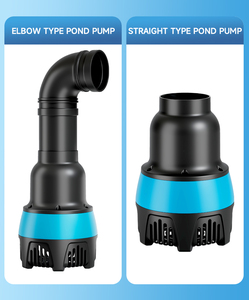
Lake and pond degradation stems primarily from thermal stratification. During warmer seasons, solar radiation heats the surface water layer (epilimnion), causing it to become less dense than the cold bottom layer (hypolimnion). The boundary separating these layers—the metalimnion or thermocline—acts as a physical barrier preventing atmospheric oxygen transfer to the deep benthic zones.
In un-aerated bodies of water, aerobic microbial digestion at the lake sediment level rapidly consumes available Dissolved Oxygen (DO). Once DO drops below 2.0 mg/L, anoxic conditions prevail. Anoxia triggers anaerobic digestion, which releases noxious gases such as hydrogen sulfide (H₂S), methane (CH₄), and ammonia (NH₃). More critically, anoxic sediment chemistry converts insoluble ferric phosphate into soluble ferrous phosphate, causing internal phosphorus loading that fuels toxic blue-green algae (cyanobacteria) blooms.
As a premier Chinese manufacturing facility, our aerator engineering focuses on maximizing Standard Aeration Efficiency (SAE), measured in kg O₂/kWh. By utilizing precision-balanced SS316 axial hydro-impellers, our surface splash aerators achieve up to 1.85 kg O₂/kWh, outperforming conventional paddlewheels by 34%.
Choosing between surface mechanical splashing and bottom-diffused aeration requires analyzing depth profiles, biological oxygen demand (BOD₅), and site aesthetics.
| Aeration Technology | Ideal Depth Range | Primary Circulation Mechanism | SOTR Efficiency | Best Application Setting |
|---|---|---|---|---|
| High-Flow Surface Aerators | 1.0m – 3.0m (<10 ft) | Mechanical surface pumping & splash droplet gas exchange | 1.5 – 1.9 kg O₂/kWh | Retention basins, fish farming ponds, commercial fountains |
| Subsurface Micro-Pore Diffusers | 3.0m – 15.0m+ (>10 ft) | Plume-driven air lift circulation & bubble surface transfer | 2.2 – 3.1 kg O₂/kWh | Deep natural lakes, reservoirs, large recreational waters |
| Solar Hydro-Jet Aerators | 1.5m – 5.0m | Submerged directional jet venturi induction | 1.3 – 1.6 kg O₂/kWh | Off-grid remote ponds, agricultural run-off sites |
| Ultra-Fine Nanobubble Injection | 0.5m – 8.0m | Neutral buoyancy gas liquid dissolution without updraft | 3.8 – 4.5 kg O₂/kWh | Severe algae mitigation, heavy industrial sludge treatment |
Leveraging decades of specialized hydraulic fluid mechanics and electrical engineering, our OEM/ODM facility bridges high-performance manufacturing with cost-competitive international supply chains. Unlike mere trading entities, our 15,000 m² state-of-the-art facility integrates raw material casting, dynamic impeller balancing, CNC underwater motor winding, and automated IP68 pressure chamber testing.
We utilize heavy-duty SS304/SS316 stainless steel enclosures and marine-grade anodized aluminum (6061-T6) brackets to guarantee zero corrosion in high-salinity coastal or brackish waters.
Equipped with oil-filled or water-cooled Franklin-style electric motors with dual mechanical silicon carbide seals, delivering continuous 24/7 duty cycles up to 50,000 operational hours.
We offer global procurement support: customized power cord lengths (10m–100m), voltage adaptation (110V/220V/380V/460V at 50/60Hz), custom spray pattern nozzles, and white-label dealer packaging.
Every floating fountain, de-icer, and robotic desilting crawler leaving our assembly line undergoes a 100% full-load hydraulic test tank immersion for 72 consecutive hours. We maintain strict compliance with CE, RoHS, and ISO9001 certifications, delivering rock-solid reliability backed by our comprehensive factory warranty.
As environmental regulations tighten globally (such as the EU Water Framework Directive and US EPA NPDES mandates), municipal contractors, resort developments, and commercial aquaculture operators are altering their procurement criteria. Understanding these shifts enables B2B buyers to make future-proof capital investments.
With rising electricity costs and the expense of running long underwater power cables across remote lakes, demand for solar-powered direct-drive brushless DC aerators has increased by 42% year-over-year. Future systems utilize MPPT (Maximum Power Point Tracking) controllers coupled with smart lithium iron phosphate (LiFePO4) storage, allowing continuous 24-hour operation even during extended overcast days.
Modern municipal retention basins no longer rely on single-speed timer switches. Next-generation aeration systems are integrated with multi-parameter IoT water sensors (DO, Temperature, pH, Turbidity). By pairing aerator motors with Variable Frequency Drives (VFDs), systems automatically ramp up RPMs when DO drops below critical thresholds (e.g., <4 mg/L at dawn) and throttle down during optimal conditions, reducing energy consumption by up to 35%.
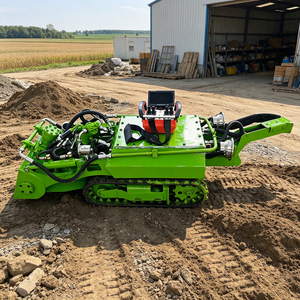
Mechanical aeration alone cannot clear decades of accumulated heavy organic muck (benthal deposit). The procurement trend is shifting toward hybrid biological-mechanical solutions: pairing high-flow circulation aerators with remote-controlled underwater crawler desilting robots. These submersibles remove heavy sludge without draining the pond or disrupting public aquatic ecosystems.
Procurement specifications now heavily emphasize recyclable materials and food-grade non-toxic dielectric fluids. The industry is phasing out petroleum-based motor lubricants in favor of environmentally safe, bio-degradable synthetic polyol ester oils to prevent ecological damage in the rare event of a mechanical seal failure.
Under-sizing an aeration system results in persistent algae blooms and fish mortality, while over-sizing causes unnecessary capital expenditure and electrical overhead. Our engineering team utilizes the following baseline sizing formula for surface area and volumetric volume calculation:
Standard Aeration Sizing Formula:
Required Horsepower (HP) = (Lake Surface Area in Acres × Average Depth in Feet × Biological Loading Factor) / 3.5
*Biological Loading Factor: Low (Clear water/No fish) = 1.0; Medium (Golf course runoff/Moderate fish) = 1.5; Heavy (Aquaculture/Severe sludge) = 2.2+
Step-by-Step Selection Methodology:
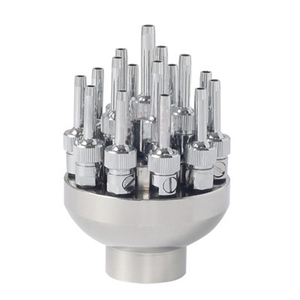
While both float on the water surface, their internal hydraulic impellers differ significantly. A decorative pond fountain uses high-pressure, low-flow nozzles to force water high into the air for visual patterns (e.g., Geyser, Crown, Three-Tier), sacrificing aeration volume for aesthetics. A high-flow surface aerator utilizes an open-propeller design to move massive volumes of water (often over 800-1000 GPM per HP) at low pressure, creating intense surface agitation and droplet evaporation that maximizes dissolved oxygen transfer rate.
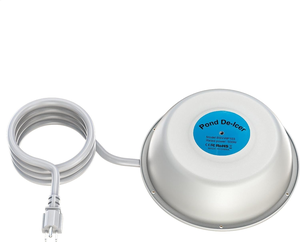
Water reaches its maximum density at 4°C (39°F) and sinks to the lake bottom. Floating de-icers and dock-mounted agitators draw this warmer bottom water upward to the surface via high-velocity directional propellers. This continuous thermal stream prevents ice formation around floating docks, boat lifts, pilings, and seawalls, eliminating costly structural jacking and ice-expansion damage.
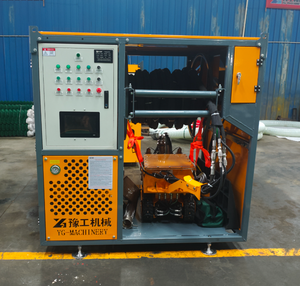
Aeration accelerates aerobic biological breakdown of organic sediment, but it cannot dissolve inorganic silt, sand, and dense clay accumulation. Remote-controlled underwater desilting robots physically vacuum or brush heavy sediment layers from lake bottoms, pumping sludge directly to dewatering bags or shore treatment tanks without draining the reservoir or disrupting aeration operations.
For saltwater, estuarine, or high-salinity aquaculture ponds, specify SS316 stainless steel or marine-grade anodized aluminum (6061-T6) alongside sacrificial zinc/magnesium anodes. SS304 is highly durable for fresh water, but chloride ions in seawater can cause pitting corrosion over extended exposures.
All our submersible motors feature IP68 ingress protection ratings, internal thermal overload protection switches, overload current sensing, and quick-disconnect underwater power cable cords. We strongly advise connecting all equipment through a certified Ground Fault Circuit Interrupter (GFCI) or Residual Current Device (RCD) breaker rated at 30mA trip threshold.
Yes. As a direct manufacturer, we supply motors wound for global grid standards including 110V-120V 60Hz (North America), 220V-240V 50Hz/60Hz (Europe/South America/Asia), and 380V-440V 3-Phase (Industrial). We provide full OEM branding, laser-etched nameplates, custom cable lengths up to 100 meters, and custom molded packaging for commercial distributors.
Routine inspection is recommended every 6 months. Maintenance includes cleaning marine growth or debris from the intake screen, inspecting the sacrificial zinc anode for wear, checking power cord jackets for abrasion, and verifying motor seal integrity. Oil-filled motors typically require factory seal replacement after 20,000 to 30,000 operational hours.
Standard inventory models and small batch sample orders ship within 3 business days. Bulk OEM container orders (20ft/40ft HQ) are manufactured, quality-tested, and ready for port loading within 15 to 20 business days from deposit confirmation.
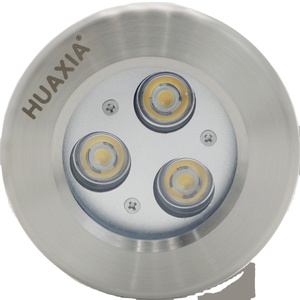
Our IP68 stainless steel LED fountain ring lights mount directly to the float assembly bracket surrounding the center nozzle. Utilizing low-voltage 24V DC transformers with DMX512 or wireless RGB remote controllers, they illuminate spray patterns up to 12 meters high with ultra-bright energy-efficient illumination.
We offer EXW, FOB, CIF, and DDP (Delivered Duty Paid) shipment options. All packages are encased in heavy-duty export plywood crates with internal high-density foam padding to prevent transit damage. Full maritime insurance coverage is included on all ocean freight shipments.
Get direct factory pricing, engineering project sizing support, and customized OEM specifications directly from China's leading lake aeration factory team.