
High-Performance IP68 Stainless Steel Underwater Luminaires & Precision CNC Fountain Nozzles
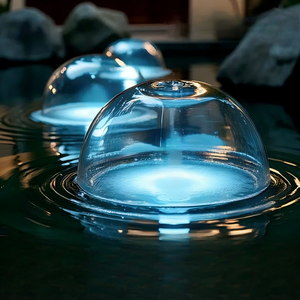
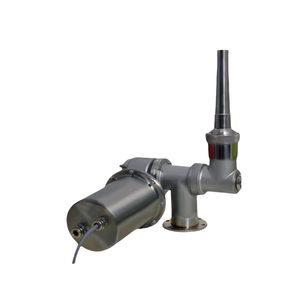
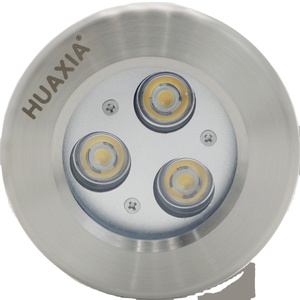
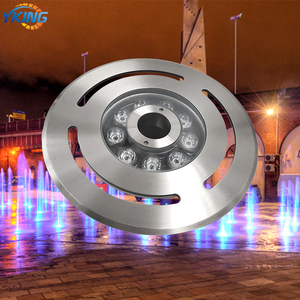
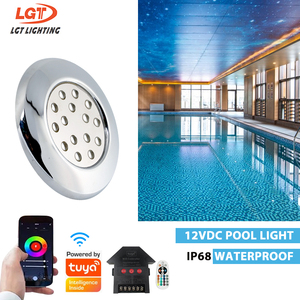
Submerged architectural illumination represents one of the most punishing operational environments in modern optical and mechanical engineering. Luminaires deployed in music fountains, commercial water features, municipal parks, and hotel water displays must withstand continuous hydrostatic pressure, galvanic corrosion, chemical additives (such as chlorine and anti-algal agents), and extreme thermal cycling between submerged continuous operation and dry testing phases.
As a leading Chinese original equipment manufacturer (OEM) and direct factory specializing in professional stainless steel fountain lights, our engineering methodology relies on strict adherence to international standard IEC 60598-2-18 (luminaires for swimming pools and similar applications), coupled with high-precision CNC machining of AISI 304 and AISI 316L stainless steel alloys. This whitepaper establishes the procurement benchmark for global engineering contractors, landscape architects, and commercial lighting distributors seeking maximum Information Gain regarding material selection, optical efficiency, control protocol stability, and lifecycle cost optimization.
Utilizing high-purity austenitic stainless steel with minimal carbon content prevents intergranular corrosion post-welding, guaranteeing structural integrity in chlorinated and saline aquatic environments.
Engineered dielectric potting material directly transfers LED junction heat into the heavy stainless steel body, ensuring thermal equilibrium even during low-water conditions.
Real-time bidirectional feedback protocols enable millisecond-level color synchronization with dynamic hydro-jets, dynamic musical fountains, and laser projectors.
A primary failure mode in sub-standard underwater fountain lights is pitting corrosion and stress corrosion cracking (SCC). When evaluating fountain light suppliers, technical procurement officers must scrutinize the alloy composition of the fixture housing. The standard baseline for fresh-water decorative fountains is AISI 304 (UNS S30400), containing 18% chromium and 8% nickel. However, for music dancing fountains operating in coastal environments, high-salinity pools, or water features utilizing brackish water, AISI 316L (UNS S31603) is mandatory.
The addition of 2.0% to 3.0% molybdenum in AISI 316L drastically elevates its Pitting Resistance Equivalent Number (PREN). Our manufacturing plant utilizes precision CNC lathe turning and automated robotic TIG welding, followed by full chemical passivation and electropolishing. Electropolishing removes surface iron contamination, yielding a micro-passivated chromium oxide layer that drastically lowers surface roughness (Ra < 0.2µm), preventing biofouling attachment and organic mineral scaling.
| Evaluation Parameter | AISI 304 Stainless Steel | AISI 316L Marine Steel | Cast Aluminum (Sub-Par) | ABS Plastic (Commercial Grade) |
|---|---|---|---|---|
| Pitting Resistance (PREN) | 19.0 – 20.0 | 23.0 – 25.0 | Low (Rapid Oxidation) | N/A (Non-Metallic) |
| Chlorine Tolerance | Up to 2.0 ppm free chlorine | Up to 5.0 ppm free chlorine | Not Recommended (< 0.5 ppm) | High Chemical Inertness |
| Thermal Conductivity | 16.2 W/m·K | 14.6 W/m·K | 160 – 200 W/m·K | 0.19 W/m·K (Poor Dissipation) |
| Structural Tensile Strength | 515 MPa | 485 MPa | 160 – 240 MPa | 40 – 50 MPa |
| Expected Operating Life | 10+ Years (Freshwater) | 15+ Years (Saline/Marine) | 1 – 3 Years (Coating Failure) | 2 – 5 Years (UV Degradation) |
The IP68 rating is frequently claimed by suppliers, yet field failures due to water ingress remain widespread in low-cost fountain projects. In true industrial manufacturing, achieving IP68 under continuous hydrostatic pressures (1.5 bar to 5.0 bar, corresponding to depths of 15 to 50 meters) requires a multi-tier engineering defence mechanism:
Every batch of manufactured fountain lights undergoes differential pressure vacuum testing to verify 0.00% gas leakage prior to high-voltage dielectric burn-in.
Utilizing CREE, OSRAM, or Lumileds LED emitters with a Color Rendering Index (CRI) > 80/90 ensures vivid, true-to-life water jet illumination without spectral distortion.
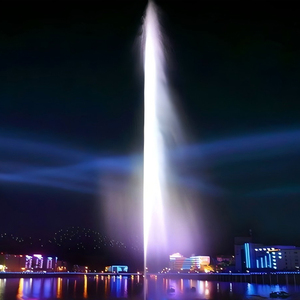
Illuminating dynamic water columns requires sophisticated optical physics. Water sprays scatter light differently depending on water density, jet height, bubble aeration, and nozzle geometry. For example, a clear straight jet nozzle requires a narrow beam angle (8° to 15°) to throw light to high altitudes without lumen dissipation, whereas a aerated foaming nozzle or mushroom spray pattern demands wide-angle frosted optics (45° to 60° or elliptical distribution) to light up the foam bubbles uniformally.
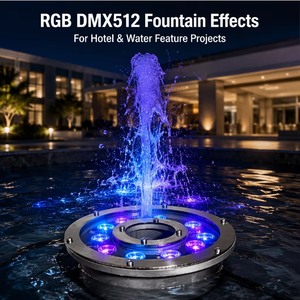
Modern musical dancing fountains rely heavily on digital control architectures. The standard industry interface is DMX512-A coupled with Remote Device Management (RDM). In high-speed music fountains, light fixture response times must be instantaneous. Our internal DMX decoder boards feature 16-bit smooth PWM dimming ratios (65,536 dimming steps) and refresh frequencies exceeding 4,000Hz. This ultra-high PWM frequency eliminates flicker during high-speed television broadcasting, slow-motion filming, and 4K digital camera recording of municipal fountain shows.
Under international electrical safety codes for submerged water features, operating voltage must strictly comply with Safety Extra Low Voltage (SELV) regulations, capping operational power at DC24V or AC12V/24V. Operating low-voltage high-wattage fixtures over long distances introduces significant voltage drops along copper conductors.
| Total Load (Watts) | Current at DC24V | Max Cable Length (1.5mm²) | Max Cable Length (2.5mm²) | Max Cable Length (4.0mm²) |
|---|---|---|---|---|
| 36 Watts (3x 12W Fixtures) | 1.5 Amperes | 22 Meters | 36 Meters | 58 Meters |
| 72 Watts (6x 12W Fixtures) | 3.0 Amperes | 11 Meters | 18 Meters | 29 Meters |
| 108 Watts (4x 27W Fixtures) | 4.5 Amperes | 7.5 Meters | 12 Meters | 19.5 Meters |
| 216 Watts (8x 27W Fixtures) | 9.0 Amperes | 3.7 Meters | 6 Meters | 9.7 Meters |
As smart city infrastructure, immersive urban tourism, and eco-friendly real estate developments accelerate globally, the procurement criteria for fountain lights and nozzles are evolving rapidly. Technical buyers must anticipate the following five key industry shifts over the coming decade:
China has established itself as the global epicenter for precision stainless steel hydro-lighting manufacturing. However, sourcing high-reliability fixtures requires selecting factories with verified Quality Assurance (QA) and Quality Control (QC) protocols. Our manufacturing facilities incorporate end-to-end vertically integrated production:
Everfine integrating spheres measure spectral power distribution, chromaticity coordinates, flux (lumens), and luminous efficacy (lm/W) for guaranteed optical consistency.
Fixtures undergo 72-hour continuous submerged operation under pressurized water chambers simulating 10-meter submersion depths prior to final packaging.
Complete compliance with CE, RoHS, FCC, ISO9001, and IP68 certification protocols ensures seamless customs clearance and municipal tender compliance worldwide.
Below are authoritative responses to the most critical technical inquiries encountered during project design, tender specification, and product procurement.
For standard inland freshwater decorative fountains, artificial lakes, and hotel garden ponds with controlled chemical balances, AISI 304 stainless steel provides excellent corrosion resistance and mechanical durability. However, if the project is located near coastal areas (salt air exposure), utilizes seawater, or operates in swimming pools with high chlorine concentration (> 2.0 ppm), AISI 316L must be specified. AISI 316L contains added molybdenum, offering superior resistance to pitting corrosion and crevice corrosion.
Our standard heavy-duty stainless steel fountain lights are rated for continuous submersion at depths up to 5 meters (approx. 0.5 bar pressure). For specialized high-pressure projects, deep lakes, or submerged pool floor installations, we custom-engineer reinforced fixtures with 12mm tempered glass and specialized potting resins capable of withstanding submersion depths up to 30 meters (3.0 bar pressure).
International safety standards (such as IEC 60598-2-18 and NEC Article 680) strictly dictate that underwater luminaires in accessible public or commercial water features must operate under Safety Extra Low Voltage (SELV) conditions—typically DC24V or AC12V/24V. Low voltage eliminates the risk of fatal electrical shocks to maintenance personnel or the public in the event of cable damage. Additionally, DC24V drivers offer superior dimming control for dynamic DMX512 color programming.
Each RGB fountain light contains internal or external DMX decoders. Every color channel (Red, Green, Blue, White) is assigned a specific DMX address (1 to 512). A master controller sends high-speed digital data instructions over RS485 shielded twisted-pair cables. This allows independent control over brightness, color mixing, strobe effects, and millisecond-level synchronization with water pump solenoids and music tracks.
Underwater LED lights rely on surrounding water to absorb heat generated by high-power LED chips. Operating submerged lights out of water for extended periods can cause thermal buildup, reducing LED lifespan or triggering thermal shutdown. However, our advanced fixtures feature internal Intelligent Thermal Throttle (ITT) protection circuits. If ambient temperatures exceed 65°C during dry installation testing, the driver automatically dims current to prevent thermal damage.
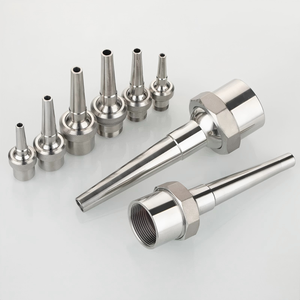
CNC 1D and 2D dynamic nozzles utilize high-precision stepper motors or servo drives enclosed in IP68 stainless steel housings. Unlike fixed static nozzles, 1D nozzles swing water jets along a single axis (±45° or ±90°), while 2D nozzles offer 360-degree dual-axis movement. When combined with DMX512 control and dynamic RGBW lighting, dynamic nozzles create complex wave patterns, matrix dancing effects, and intricate hydro-art choreography.
We provide comprehensive OEM/ODM customization, including custom housing dimensions, specialized mounting bracket configurations, specific optic beam angles (8° to 60°), custom cable length and jacket materials (VDE certified rubber or TPU cables), laser-engraved brand logos, custom DMX address programming, and tailored wattage configurations (from 3W micro-lights up to 108W high-intensity floodlights).
All finished products are packed in custom high-density EPE foam cradles and reinforced double-wall corrugated export cartons. Stainless steel surfaces are covered with anti-scratch protective film. Heavy orders or custom fountain nozzle skids are packed in ISPM-15 compliant heat-treated wooden crates to prevent shock, vibration, and moisture damage during ocean freight transit.
Investing in high-grade stainless steel fountain lighting and precision nozzles is a critical capital decision that directly impacts the aesthetic beauty, structural safety, and maintenance overhead of commercial water displays. Partnering with a dedicated Chinese manufacturer equipped with advanced CNC machinery, spectroradiometer testing labs, and strict ISO quality management ensures your projects achieve maximum visual impact with zero field failures.
For custom engineering consultations, project bill of materials (BOM) quotations, or to download our full 2025/2026 technical product catalog, click the catalog request button below to connect directly with our engineering sales department.
Direct Factory Supply • Custom OEM/ODM Engineering • Global IP68 Certification Guarantee