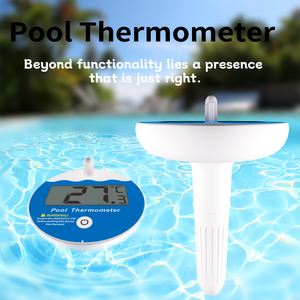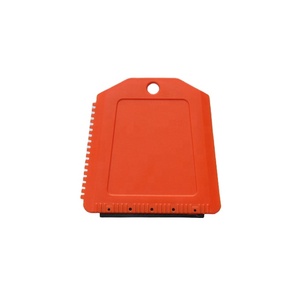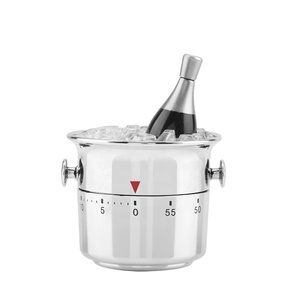
Engineered for maximum energy efficiency, severe weather durability, and seamless automation in aquatic, marine, residential, and commercial applications.
Navigating harsh sub-zero environments requires absolute hardware reliability. Grounded in a rich manufacturing legacy dating back to 1963, our engineering operations combine North American heavy-duty aquatic design principles with China's top-tier high-precision electronics manufacturing ecosystem.
Whether you require sub-surface de-icing controllers, dock-mount thermal timer switches, smart thermostatic timing discs, or specialized medical ice therapy timing pumps, our production facilities yield unmatched operational longevity. Every unit undergoes rigorous stress testing in sub-zero thermal chambers to guarantee zero failure under severe operational conditions.

Our OEM/ODM capabilities meet strict international safety standards while offering robust customization for distributors, municipal project buyers, and commercial OEMs.
Integrated microprocessors continuously evaluate ambient air temperatures, triggering de-icing timing cycles only when freezing thresholds are crossed, mitigating wasteful continuous operation.
Equipped with high-amp capacity switching components (15A to 30A @ 110V/220V/480V) engineered to handle high inrush currents from heavy industrial motor agitators, slingers, and pumps.
Formulated with UV-stabilized impact-resistant polymers and double-O-ring seals to resist salt spray corrosion, freezing ice lockup, and moisture infiltration in marine environments.
Optional Wi-Fi, Bluetooth, and cellular gateway modules allow facility managers to monitor water temperature, set pulse timing intervals, and override de-icing schedules remotely via mobile app.
Programmable off-set timers enable alternating operation between multiple de-icers across large marina setups, preventing electrical panel overloads while ensuring equal wear distribution.
Fully certified electronics assembly ensuring smooth customs clearing and full electrical regulatory compliance across North American, European, and Asian commercial markets.
Ice damage to docks, pilings, boat lifts, and municipal water intakes represents hundreds of millions of dollars in annual infrastructure loss across temperate cold-climate regions. Traditional de-icing strategies relied upon continuous 24/7 motor rotation during winter months. However, modern environmental directives and soaring energy costs have fundamentally shifted market demand toward intelligent thermostatic timing controllers.
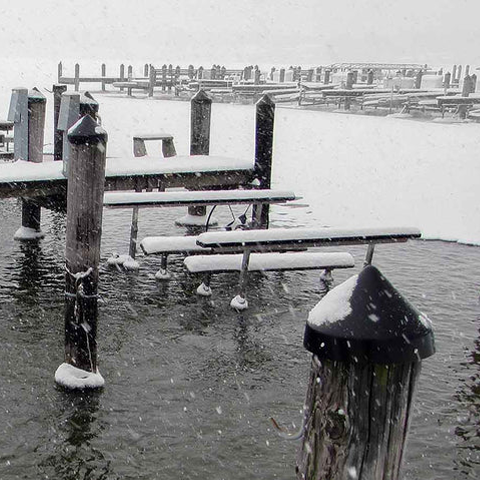
De-icing machinery functions by drawing warmer, denser water from the thermal benthic layer at the bottom of a water body (typically 39°F / 4°C) up to the sub-freezing surface layer. Continuous operation often over-mixes the water column, inadvertently cooling the bottom temperature and dissipating the thermal reservoir needed to maintain open water around structural pilings.
By implementing a precision-calibrated de-icer timer control system, operators achieve a balanced duty cycle—running agitators or slingers for predetermined intervals (e.g., 15 minutes per hour, or pulsed based on falling temperature triggers). This conserves critical benthic thermal energy, preserves motor component lifespan, and reduces electrical grid load dramatically.
| Controller Technology Type | Operational Efficiency | Energy Savings vs Baseline | Ideal Application Scenario |
|---|---|---|---|
| Manual Mechanical Countdown Timer | Basic Control | 15% – 25% | Short-term manual ice bath therapy, small residential ice buckets |
| Analog Heavy-Duty Duty-Cycle Timer | Moderate Automation | 35% – 45% | Standard dock-mount de-icers, small marina slips, agricultural troughs |
| Microprocessor Digital Thermostat Timer | High Optimization | 50% – 60% | Commercial marina docks, HOA lakefront property management |
| Smart IoT Ambient-Integrated Timer Controller | Maximum Efficiency | 62% – 75% | Large-scale municipal water basins, industrial mining ponds, deepwater ports |
When procurement teams evaluate China top de-icer timer suppliers, several critical hardware metrics must be verified to ensure field reliability:
As global supply chains place greater emphasis on ESG (Environmental, Social, and Governance) compliance and smart infrastructure integration, de-icer timer manufacturing is undergoing a rapid technological evolution. Global procurement managers should align their sourcing strategies with four primary emerging industry trends:
Next-generation digital de-icer timers are transitioning from simple bimetallic switches to microcontrollers featuring predictive weather algorithms. By synthesizing real-time ambient barometric pressure, wind chill indices, and water temperature trends at the edge, these smart units initiate pre-heating cycles prior to fast-freeze events, preventing surface ice formation while optimizing kilowatt consumption.
With remote aquatic installations and off-grid ranch ponds requiring ice control, demand for 24V/48V DC timer controllers optimized for direct coupling with solar PV arrays and lithium battery storage systems is accelerating. China’s manufacturing ecosystem leads this transition by integrating high-efficiency MPPT (Maximum Power Point Tracking) circuits directly into waterproof timing modules.
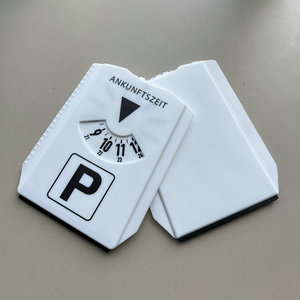
Global distributors are moving away from monolithic timer designs toward modular controller platforms. Universal base units with snap-in modules (such as digital display discs, physical ice scrapers for handheld units, thermostatic probes, or remote LoRaWAN communication chips) enable brands to streamline inventory stocking while catering to varied regional market demands.
Expert guidance tailored for enterprise buyers, electrical contractors, and OEM product line managers.
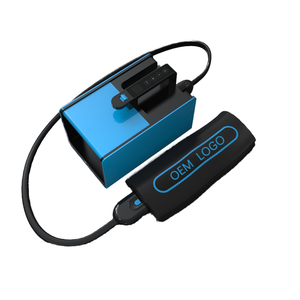
Mechanical wind-up timers (such as 60-minute spring-wound units) rely on manual gear escapements, making them ideal for short-duration handheld devices, portable ice therapy pumps, or kitchen gadgets where zero standby power is required. Digital de-icer controllers utilize solid-state microprocessors and internal battery backups to execute recurring 24-hour or 7-day automated schedules, incorporating ambient temperature triggers essential for winter-long unattended ice control.
Large installations (such as commercial marinas with 20+ de-icers) can cause circuit breakers to trip if all heavy inductive motors start simultaneously. Advanced multi-channel de-icer timers implement staggered startup delays (staggered by 3 to 10 seconds), preventing massive initial current surges on main breaker panels while ensuring uniform ice-free protection zones.
Yes. As a premier original equipment manufacturer (OEM/ODM), we provide complete customization services including custom PCB layouts, dual-voltage (110V/230V) switching capabilities, tailored enclosure colors, laser-etched branding, customized lead lengths, and custom firmware programming for specific temperature-differential trigger points.
Our outdoor aquatic and dock-mount de-icer timer enclosures carry certified IP67 or IP68 ratings, incorporating ultrasonic welding, conformal circuit board coating, and high-grade silicone O-rings. Operating temperature tolerances range from -40°C (-40°F) up to +85°C (+185°F), protecting against thermal shock, heavy condensation, and UV degradation.
Standard catalog units maintain rapid dispatch cycles within 3 to 5 business days. For customized OEM/ODM production runs, initial sample approval typically takes 7 to 14 days, with bulk mass production fulfilled in 20 to 30 days. MOQs start as low as 100 units for standard customized branding, scaling flexibly for enterprise contract buyers.
Running motor agitators continuously causes premature shaft seal wear, bearing breakdown, and excessive thermal buildup. By modulating operation via precision duty-cycle timing, total motor running hours are reduced by 40% to 60%, significantly extending physical service life, reducing maintenance calls, and preserving manufacturer warranty integrity.
Connect directly with our engineering team to review full product specifications, custom enclosure designs, wholesale price tiers, and factory quality assurance documentation.