
High-efficiency aquatic desilting robots, eco-friendly kinetic pond aerators, industrial ice systems, and marine-grade dock hardware designed for commercial aquaculture and municipal water bodies.
In thermal stratification within static water bodies, ponds and aquaculture reservoirs split into distinct ecological zones: a warm, oxygenated upper layer (epilimnion) and a cold, oxygen-starved bottom layer (hypolimnion). Without active mechanical circulation or continuous aeration, anaerobic decomposition occurs at the pond sediment level. This results in the accumulation of toxic hydrogen sulfide ($H_2S$), ammonia ($NH_3$), organic muck buildup, sudden fish kills, and uncontrolled toxic cyanobacteria blooms.
As a leading China Wholesale Windmill Pond Aerators Supplier, our manufacturing framework addresses this environmental challenge by utilizing wind kinetic energy to power direct-drive bottom-diffused compressor systems. Unlike traditional surface splash aerators that expend massive electrical energy to agitate only top-level water, windmill-driven aeration harnesses ambient surface winds (starting as low as 3 to 5 mph) to drive heavy-duty diaphragm air pumps. Compressed air is delivered via self-weighted sink tubing to micro-pore diffuser manifolds positioned at the deepest points of the water body.
When micro-bubbles release at the pond bottom, they initiate a process known as laminar vertical destratification. As millions of fine bubbles ascend toward the surface, they entrain vast volumes of cold, oxygen-depleted bottom water, pulling it upward into contact with atmospheric air. This continuous destratification eliminates thermal boundary layers, increases Dissolved Oxygen (DO) concentrations throughout the entire water column from top to bottom, and accelerates aerobic bacterial digestion of organic benthic muck.
Harnesses renewable wind energy to operate 24/7 without grid infrastructure, utility bills, or remote power cabling costs for agricultural and municipal installations.
Releases fine micro-bubbles at the pond floor, inducing full-column water destratification and neutralizing toxic ammonia and hydrogen sulfide gases.
Increases benthic dissolved oxygen levels, empowering beneficial aerobic bacteria to naturally digest organic sludge and prevent summer algae blooms.
Choosing the correct aeration architecture depends on water depth, power availability, benthic sediment loads, and operational budget. Below is a engineering benchmark comparing our kinetic windmill aerator systems against conventional electrical surface splash aerators, subsurface compressors, and muck management units.
| Aeration Architecture | Power Source | Air / Water Circulation | Effective Depth | Energy Consumption | Primary Benthic Impact |
|---|---|---|---|---|---|
| Windmill Kinetic Aerator | Ambient Wind (3-5+ mph) | 1.5 - 4.5 CFM (Subsurface) | Up to 30 Feet | 0.00 kWh / Year | Destratifies bottom layer, oxidizes organic sludge |
| Subsurface Electric Aerator | Grid Electric (110V/220V) | 2.0 - 8.0 CFM (Continuous) | 8 to 45 Feet | 150W - 750W Continuous | High-volume bottom oxygenation for deep lakes |
| Surface Display Fountain | Grid Electric / Solar | 300 - 800 GPM (Surface Spray) | 1 to 6 Feet | 0.5 HP - 5.0 HP | Surface aesthetic splash, shallow circulation |
| AquaSweep® Muck Blaster | Submersible Electric Motor | High-Velocity Current Jet | 2 to 12 Feet | 0.5 HP - 1.5 HP | Physically displaces shoreline muck & debris |
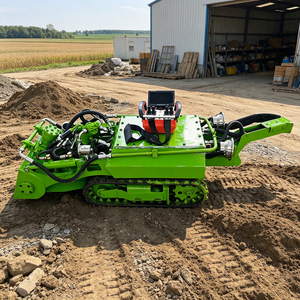
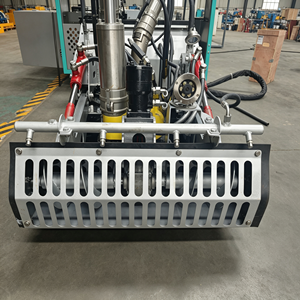
| Submersible Dredging Robot | Hydraulic / Electric Crawler | Mechanical Brush + Suction | 0.5 to 15 Meters | Industrial Machine Heavy Power | Clears thick heavy silt & industrial sludge |
* Note: All manufacturing parameters can be customized via OEM/ODM engineering channels according to client lake geometry and regional climate requirements.
The global market for commercial water management, commercial aquaculture, and municipal pond remediation is undergoing a structural shift driven by decarbonization targets, rising electricity tariffs, and stringent ESG (Environmental, Social, and Governance) compliance mandates. Global buyers, agricultural distributors, and marine contractors sourcing from China suppliers must align with four macro trends defining the next decade of water management manufacturing:
Modern commercial aquaculture and remote pond management cannot rely solely on single-source power. Sourcing trends show a 45% annual increase in demand for dual-source hybrid systems that combine kinetic windmill compressors with auxiliary solar PV panels. During high-wind conditions, the mechanical windmill compressor provides deep aeration; during stagnant, hot summer afternoons, automated DC solar controllers initiate auxiliary subsurface air pumps, guaranteeing uninterrupted 24/7 dissolved oxygen supply.
Legacy aerator suppliers historically relied on painted carbon steel or 304 stainless components, which suffer from accelerated galvanic corrosion in brackish aquaculture ponds and high-salinity coastal environments. B2B buyers now mandate 316L stainless steel hardware, electro-polished impellers, self-lubricating fluorocarbon seals, and UV-inhibited virgin high-density polyethylene (HDPE) floats capable of enduring 15+ years of continuous continuous weathering.
While continuous aeration prevents organic muck build-up, legacy ponds with decades of accumulated inorganic silt require mechanical intervention. Sourcing for remote-controlled underwater desilting robots and submersible crawler dredgers has emerged as a high-growth sector. Combining underwater robotic desilting with long-term windmill aeration represents the state-of-the-art closed-loop protocol for water body restoration.
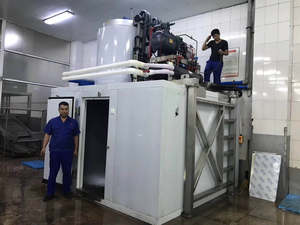
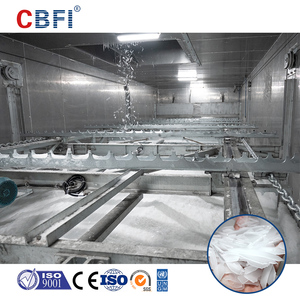
In commercial fish farming and shellfish processing, water aeration is directly paired with post-harvest preservation infrastructure. Modern wholesale buyers source comprehensive equipment packages including windmill aerators for pond grow-out alongside 1 to 10-Ton industrial flake ice machines. Producing high-purity sub-cooled flake ice on-site ensures rapid thermal core reduction of harvested fish, extending shelf life and complying with international export food safety protocols.
With a multi-decade heritage in marine engineering, precision metal fabrication, and fluid dynamics research, our factory infrastructure delivers end-to-end OEM and ODM support for international distributors, government water projects, and commercial aquaculture enterprises worldwide.
From custom tail-vane branding and variable mast heights to specialized diffuser manifold arrays, our engineering team tailors every system to your regional specifications.
Every windmill hub, compressor diaphragm, underwater light assembly, and dock bracket undergoes dynamic load testing, salt-spray chamber testing, and pressure leak verification before packaging.
Located in proximity to major container shipping hubs, we maintain robust inventory of standard components, guaranteeing dispatch of full container orders within 3 to 10 business days.
Technical clarity and commercial guidance for purchasing managers, engineering contractors, and wholesale distributors sourcing windmill aerators and aquatic systems.
Our windmill aerators feature high-torque 4-blade and 12-blade aerodynamic turbine configurations engineered to initiate rotor movement in light breezes starting at 3 to 5 mph. For locations experiencing prolonged calm conditions, we supply integrated hybrid solar-wind backup systems that automatically engage low-voltage DC subsurface compressors to maintain continuous oxygenation.
A standard industrial windmill aerator equipped with dual self-cleaning micro-pore diffuser plates effectively aerates and destratifies ponds up to 2 to 3 acres in surface area with water depths ranging from 6 to 30 feet. For larger water bodies or complex pond shapes, multiple diffuser nodes can be manifolded to a single heavy-duty compressor unit.
Surface fountains primarily move surface water for visual splash aesthetics, transferring oxygen only to the top 1 to 3 feet of water. Subsurface diffuser systems release air at the lake floor, using the upward column of bubbles to overturn the entire water body. This destroys thermal stratification, reduces bottom sludge, and prevents anaerobic toxin production much more efficiently per watt of power.
For commercial coastal aquaculture applications, we supply flake ice machines with anti-corrosive 316L stainless steel evaporators, heavy-duty bitzer or copeland compressors adapted for high ambient tropical temperatures (up to 50°C), marine-grade sea-water condenser tubes, and customized voltage specifications (380V/440V 50/60Hz).
Underwater desilting crawler robots provide rapid remediation for ponds that have accumulated excessive silt over decades. The robot mechanically vacuoms and brushes heavy sludge from the pond floor without draining the water. Once initial pond depth is restored, installing a windmill aerator maintains high benthic dissolved oxygen levels, preventing future sludge re-accumulation.
Standard MOQ for wholesale windmill aerator units and marine dock hardware starts at 5 to 10 units depending on customization levels. Standard components are backed by a comprehensive 3-Year Factory Warranty on structural towers and compressors. Complete container orders typically ship within 7 to 15 days from factory dispatch.
Whether you require custom-branded OEM windmill aerators, high-capacity industrial flake ice systems, or robotic desilting crawlers for municipal project tenders, our engineering team is ready to assist with sizing calculations, CAD drawings, and factory-direct quotation pricing.