
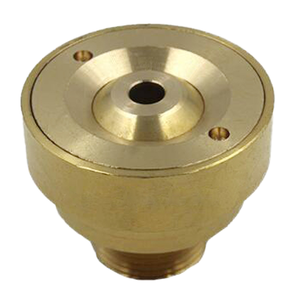
Precision-machined stainless steel direct-spray nozzle engineered for spa pools, architectural deck jets, and surface aeration enhancements.
Inquire Now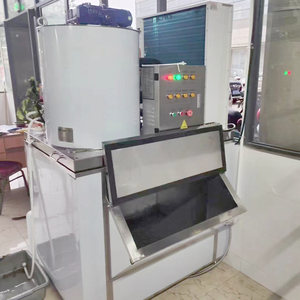
Heavy-duty 3-ton industrial flake ice generator designed for seafood processing, thermal control, and large-scale industrial cooling applications.
Inquire Now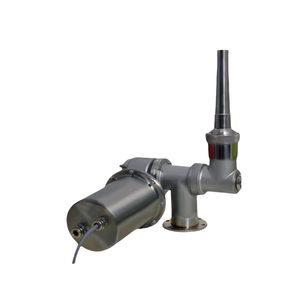
High-precision 1D CNC direct-drive fountain jet nozzle crafted from marine-grade SS316 for dynamic water displays and surface agitation.
Inquire Now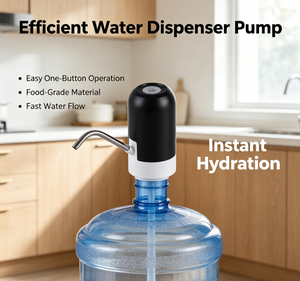
Compact, food-grade automated fluid transfer and agitation pump unit featuring micro-USB rechargeable battery and low-noise motor design.
Inquire Now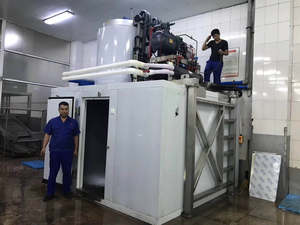
Energy-efficient 10-ton industrial flake ice plant with air-cooling condenser, Bitzer compressor, and fully automated PLC control system.
Inquire Now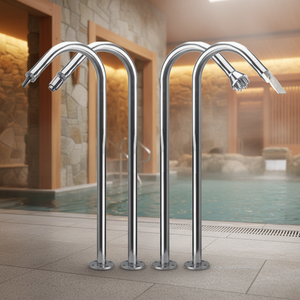
Commercial hydrotherapy and aeration nozzle system manufactured with high-velocity output for hotel resorts, thermal springs, and aquatic centers.
Inquire Now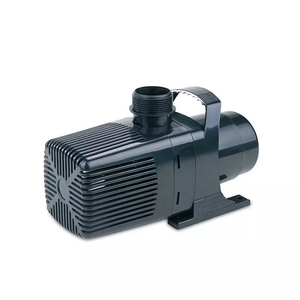
Continuous-duty submersible water circulation pump engineered for large ponds, filtration circulation, and agricultural water agitation.
Inquire Now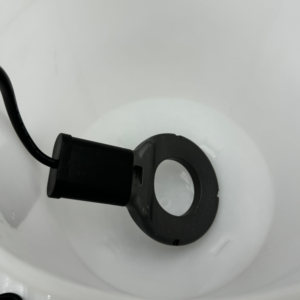
Cast-aluminum thermostatically controlled utility submersible de-icer designed for severe winter ice protection in agricultural and pond environments.
Inquire NowIn modern municipal wastewater treatment, intensive aquaculture, commercial real estate management, and industrial water storage, water agitators play a foundational role in maintaining dissolved oxygen equilibrium, preventing anaerobic organic sediment breakdown, and mitigating thermal stratification. Choosing a qualified manufacturer or OEM exporter requires rigorous technical evaluation beyond simple horsepower ratings.
Water agitation equipment encompasses a broad spectrum of mechanical configurations, including high-volume axial-flow surface aerators, directional muck-blasting circulators, bottom-diffused sub-surface aeration arrays, and thermal de-icing units. Selecting the optimal system hinges on understanding the fluid dynamics of oxygen transfer efficiency (SAE), total dynamic head (TDH), flow rate per watt (GPM/W), and structural resistance to corrosive environments.
Below is a standardized technical selection table used by industrial procurement managers, civil engineers, and aquaculture directors to evaluate equipment classes from leading global factories:
| Agitator Class | Primary Hydraulic Mechanism | Standard Oxygen Transfer Rate (SOTR) | Optimal Depth Range | Primary Industrial Application |
|---|---|---|---|---|
| High-Velocity Surface Agitators | Axial Flow Propeller / Upward Discharge | 1.8 – 2.4 kg O2 / kWh | 1.0 – 3.5 Meters | Aquaculture, Shallow Retention Ponds, Aerobic Basins |
| Directional Muck Blasters (AquaSweep®) | Horizontal High-Thrust Submersible Motor | 1.2 – 1.6 kg O2 / kWh | 0.5 – 4.0 Meters | Beach Clearing, Marina De-silting, Shoreline Circulation |
| Subsurface Bottom Diffusers | Micro-Porous Membrane / Air Compressor | 2.5 – 4.2 kg O2 / kWh | > 3.0 Meters | Deep Reservoir Destratification, Sewage Lagoon Treatment |
| Decorative Aerating Fountains | High-Pressure Impeller & Display Nozzle | 0.9 – 1.4 kg O2 / kWh | 1.5 – 5.0 Meters | HOA Retention Lakes, Commercial Real Estate, Golf Courses |
| Submersible De-Icing Units | Thermal Stratification Harvesting Propeller | N/A (Thermal Transfer Focus) | 1.5 – 6.0 Meters | Winter Marina Protection, Livestock Tank Freeze Prevention |
Rooted in over 60 years of North American engineering heritage (founded in Holland, Michigan in 1963), our partner manufacturing facilities set the benchmark for continuous-duty water management hardware. Unlike suppliers who source off-the-shelf components, tier-one factories utilize custom-machined stainless steel housings, oil-free or environmentally safe oil-filled motors (such as Franklin Electric industrial power units), and precision-balanced composite or SS316 impellers.
Decades of continuous field validation ensure that motor windings, thermal overload switches, and mechanical face seals withstand harsh chemical and salinity conditions without seal failure.
Utilizing high-torque, energy-dense electric motors rated for 24/7/365 continuous duty. Built with Class H insulation, internal thermal protection, and dual carbon-ceramic mechanical shaft seals.
Orders ship within an average of 3 business days. Custom cable lengths (up to 200+ meters), voltage configurations (110V/230V/460V 50Hz/60Hz), and specialized mounting brackets are accommodated seamlessly.
A significant technological advantage of top-tier agitator designs—such as the proprietary AquaSweep® Muck Blaster series—is multi-season versatility. During summer months, the high-velocity directional propeller is positioned near the basin floor to push organic sediment, sludge, and floating algae away from beaches, docks, and swimming zones. In winter, the same high-thrust assembly is adjusted upward to lift warm bottom water (approx. 39°F / 4°C) to the surface, maintaining ice-free buffer zones around dock pillars, boat hulls, and seawalls even in sub-zero climates.
When conducting global procurement audits across international manufacturing hubs (USA, Germany, Taiwan, China, Japan), industrial procurement officers rely on five core factory evaluation metrics:
Top global exporters excel in custom engineering (OEM/ODM), offering client-tailored spray geometries, smart Wi-Fi/cellular automated controls, and solar-hybrid power integration for remote agricultural installations.
The global water treatment and aquaculture equipment market is undergoing rapid technological evolution. Sourcing managers must align their purchasing strategy with four dominant technical shifts:
Modern agitator setups integrate real-time Dissolved Oxygen (DO) sensors connected via Modbus/LoRaWAN to VFD controllers, automatically adjusting motor RPM based on oxygen demand to optimize energy usage.
Rising utility costs in remote aquaculture and mining retention facilities are accelerating the adoption of direct-current (DC) brushless solar agitators equipped with lithium battery storage for continuous night operations.
Leading facility managers pair mechanical agitation with specialized enzymatic and micro-biological treatments. High circulation speeds distribute beneficial aerobic bacteria uniformly, dissolving muck up to 5x faster.
Surface agitators utilize high-speed impellers to draw water from below and splash it across the surface, maximizing atmospheric gas exchange and localized circulation. They are ideal for shallow to medium-depth basins (under 3.5 meters). Subsurface diffusers use shore-mounted compressors to pump micro-bubbles to the basin floor, turning over deep water columns (over 3 meters) without creating surface splash or visual noise.
System sizing requires calculating the water volume (acre-feet or cubic meters), maximum depth, biological oxygen demand (BOD), and thermal load. As a general industry rule of thumb, high-density fish farming requires 1.5 to 2.0 HP of surface agitation per surface acre, while general pond destratification requires approximately 1.0 HP per acre. Factory application engineers can perform exact sizing based on water test reports.
Industrial installations require dedicated control panels equipped with Ground Fault Circuit Interrupters (GFCI/RCD), thermal overload magnetic contactors, lightning surge arrestors, and digital timers or optical DO controllers. Utilizing high-grade heavy-duty submersed cabling with strain-relief power leads is critical to prevent voltage drop over long distances.
Yes. Directional water agitators and specialized de-icers draw dense, warmer water (approx. 39°F / 4°C) from the bottom of the water body to the surface. This continuous upward flow maintains open, ice-free water around structures even when ambient temperatures fall well below 0°F (-18°C), eliminating destructive ice expansion and jacking forces.
For North American markets, request UL and CSA electrical safety listings. For European union imports, verify CE marking, RoHS compliance, and IP68 waterproof ratings for submersed components. Quality-oriented factories will also provide ISO 9001 quality management documentation and factory wet-test certificates for each motor batch.
Anaerobic conditions at the pond bottom force bacteria to digest organic waste through fermentation, producing foul-smelling hydrogen sulfide (H2S) and methane gas. Water agitators deliver dissolved oxygen directly to the sediment layer, transitioning the ecosystem to aerobic digestion. Aerobic bacteria digest organic muck up to 20 times faster, eliminating odors and reducing sediment depth over time.