
Explore our heavy-duty structural dock brackets, pipe holders, cleat supports, and customized marine mounting systems engineered for extreme environments.
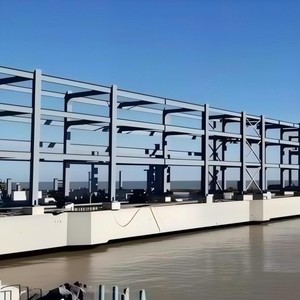
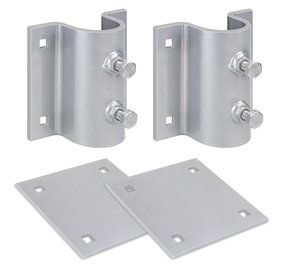
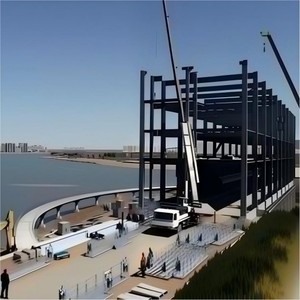
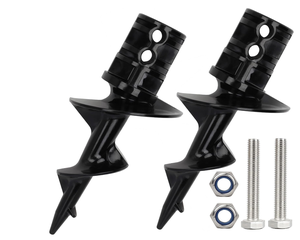
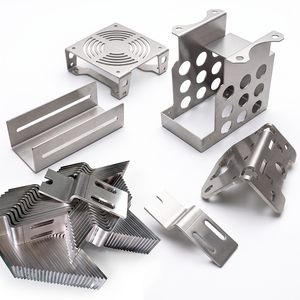
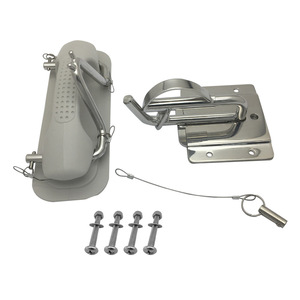
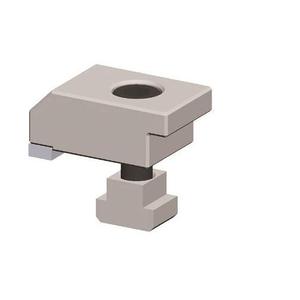
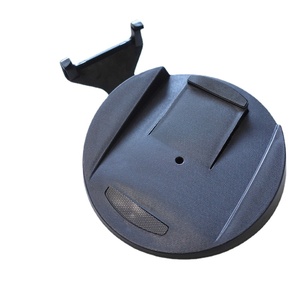
In modern waterfront civil engineering and commercial marina construction, dock mounting brackets serve as the critical dynamic load distribution interfaces between stationary pilings, floating pontoons, shore anchorages, and articulated gangways. Selecting the appropriate dock bracket hardware architecture is paramount to ensuring structural longevity, resistance to cyclic wave fatigue, and dynamic force dispersion during severe meteorological events.
As a leading marine hardware manufacturer with over six decades of precision metal fabrication experience, our engineering methodologies leverage advanced metallurgical selection, robotic automated welding, and rigorous stress analysis to craft structural brackets capable of handling harsh saltwater exposure, continuous tidal fluctuations, and high-impact vessel docking stresses.
Marine environments represent one of the most aggressive corrosion threats in structural engineering due to atmospheric chloride deposition, continuous wet-dry splash zones, and galvanic action resulting from mixed metal interfaces. To mitigate material degradation, our manufacturing facilities adhere strictly to international marine structural standards:
Every dock bracket geometry manufactured in our facility undergoes digital Finite Element Analysis (FEA) testing under simulated extreme weather scenarios. By modeling multi-directional stress vectors—including lateral wave surge, vertical uplift, and rotational torsional forces—our engineers optimize gusset placement, weld fillet radius, and bolt hole tolerance to eliminate stress concentration points and increase cyclic fatigue limits by up to 340% over standard commercial brackets.
Stationary piers and floating dock systems impose completely distinct mechanical loads on structural mounting hardware:
Stationary Dock Brackets: Must withstand sustained cantilever bending moments and vertical uplift forces caused by high wind vectors and rising water lines. Heavy-gauge steel angle brackets with reinforced gussets and heavy-wall structural tubing (up to 1/2-inch wall thickness) are required to transmit forces into rigid pile foundations without permanent deformation.
Floating Dock Roller & Slider Brackets: Must accommodate continuous vertical motion along spud poles or guide pipes while resisting lateral forces caused by current drag and vessel impacts. Our heavy-duty floating dock brackets incorporate ultra-high-molecular-weight polyethylene (UHMW-PE) rollers or self-lubricating composite bushings to minimize friction, eliminate binding, and prevent metal-on-metal wear during dynamic tidal shifts.
Review the technical specification matrix below to select the optimized bracket configuration based on site hydrodynamics, salinity, and load requirements.
| Bracket Category | Material Base | Surface Treatment | Yield Strength | Max Shear Load | Target Marine Environment |
|---|---|---|---|---|---|
| Heavy-Duty Steel Structure Bracket | ASTM A36 / Q355B Steel | Hot-Dip Galvanized (ASTM A123) | ≥ 355 MPa | 15,000 lbs (66.7 kN) | Heavy commercial piers, extreme wave surge zones |
| Floating Dock Pole / Pipe Bracket | Schedule 40 Structural Steel Pipe | HDG + UHMW Roller Bushings | ≥ 250 MPa | 10,500 lbs (46.7 kN) | Tidal floating docks, spud pole mooring systems |
| Custom Marina Pontoon Bracket | 6061-T6 Aluminum Alloy | Clear Anodized / Powder Coated | ≥ 240 MPa | 8,200 lbs (36.5 kN) | Aluminum floating pontoons, residential lakefronts |
| Combination Yacht Lifter Bracket | AISI 316 Stainless Steel | Electro-Polished Passivation | ≥ 290 MPa | 12,000 lbs (53.4 kN) | Luxury yacht marinas, salt-spray severe exposure |
| Modular Side Vice Support Bracket | Custom Composite / Metallic Alloys | UV-Stabilized Protective Layer | Variable Engineered | 2,500 lbs (11.1 kN) | Modular soft docks, temporary light-duty platforms |
Building high-performance waterfront infrastructure requires a supply chain partner with proven metallurgical mastery, robust quality control systems, and flexible OEM/ODM manufacturing agility. Derived from over 60 years of engineering heritage, our facilities offer distinct commercial advantages to marine contractors, distributors, and municipal buyers worldwide.
Founded on rigorous manufacturing discipline, our production processes combine decades of practical field experience with state-of-the-art robotic fabrication techniques.
From CAD drawing optimization to custom tooling, laser cutting, CNC bending, and robotic welding, we turn complex structural client blueprints into certified physical hardware.
Every raw material heat code is tracked. We provide complete Mill Test Reports (MTRs), Salt Spray Test reports (ASTM B117), and ultrasonic weld inspection certificates.
With massive raw material reserves and agile manufacturing workflows, standard orders are processed and dispatched rapidly to meet tight project construction deadlines.
Speak directly with seasoned structural metal specialists. We provide technical consultation, load calculation reviews, and installation training for B2B partners.
Seamless export handling, ocean freight consolidation, and custom pallet packaging designed for international containerized shipping and site unloading.
The global marine construction market is experiencing a profound technological shift driven by accelerating sea-level variability, expanding coastal infrastructure investments, and a push toward sustainable marine ecosystem management. B2B procurement managers and marine engineers must align their hardware specifications with several key industry trends over the coming decade:
Traditional permanent welding on marine sites is increasingly being replaced by modular bolt-on dock bracket systems. Pre-engineered modular brackets enable rapid onsite assembly, reduce labor overhead, and allow dock owners to reconfigure pontoon layouts as operational requirements change. Universal hole patterns and adjustable sliding pile brackets are quickly becoming standard specifications in commercial marina tenders.
Environmental regulations regarding heavy metal leaching in sensitive coastal estuaries are tightening globally. Traditional hot-dip galvanizing is being refined into low-emission, eco-friendly zinc-aluminum-magnesium (ZAM) coating alloys. ZAM coatings provide up to three times greater corrosion resistance than standard zinc coatings in marine splash zones while significantly reducing zinc runoff into aquatic ecosystems.
As commercial ports and smart marinas adopt Internet of Things (IoT) monitoring, structural dock mounting brackets are evolving to house embedded strain gauges, load cells, and tilt sensors. Smart brackets provide real-time structural health telemetry, alerting marina operators to excessive pile stress, loose mounting bolts, or impact damage caused by unrecorded vessel collisions.
The demand for large floating pontoon structures capable of supporting heavy utilities, solar arrays, and high-capacity vessel berthing requires lightweight yet ultra-strong hardware. Precision-extruded marine aluminum brackets combined with isolated stainless steel pin joints are capturing market share due to their superior fatigue performance and reduced dead weight.
To ensure optimal performance and long service life, purchasing teams and project engineers should follow these essential guidelines when selecting and specifying dock brackets:
Below are detailed technical answers to common questions raised by marine contractors, structural engineers, and commercial buyers during procurement planning.
Stationary dock brackets are designed to create a rigid, fixed connection between structural wood or steel frames and stationary wooden, concrete, or steel pilings. They must resist heavy bending and shear forces. Floating dock brackets, on the other hand, incorporate sliding sleeves, hinge joints, or UHMW rollers that allow the pontoon structure to track smoothly up and down with tidal fluctuations while maintaining lateral position relative to guide piles.
For severe saltwater applications, AISI 316 Stainless Steel offers the ultimate resistance against chloride pitting. However, for structural heavy-duty load points, Hot-Dip Galvanized Carbon Steel (conforming to ASTM A123) is the most cost-effective commercial solution, providing a durable zinc layer that self-heals minor scratches. Anodized 6061-T6 aluminum is also excellent for lightweight floating dock applications where weight savings are critical.
Yes. We specialize in custom OEM and ODM marine hardware manufacturing. Our engineering department can work directly with your STEP, DWG, or PDF CAD files to produce prototype samples and execute full production runs. Our manufacturing capabilities include fiber laser cutting, high-tonnage CNC press brake bending, robotic MIG/TIG welding, custom hole punch configurations, and certified hot-dip galvanizing.
Galvanic corrosion occurs when two dissimilar metals (such as aluminum and carbon steel) are in direct contact in the presence of an electrolyte like saltwater. To prevent this, we supply non-conductive UHMW polyethylene or neoprene isolation pads and non-conductive bolt sleeves. These components physically isolate the steel bracket from the aluminum frame, completely stopping galvanic electron flow.
We provide full B2B quality documentation with every shipment, including Mill Test Reports (MTRs) tracing raw material chemical composition, coating thickness measurement reports for hot-dip galvanizing (ASTM A123), Salt Spray Test reports (ASTM B117), tensile/shear proof-load test certificates, and ISO 9001 compliance documentation upon request.
Standard catalog items are generally maintained in inventory and ship within 3 business days. Custom OEM/ODM orders requiring specialized tooling, CNC bending, and hot-dip galvanizing typically carry a production lead time of 2 to 4 weeks depending on order volume. Expedited production slots can be arranged for critical marine construction deadlines.
Connect directly with our marine technical sales team to receive comprehensive product catalogs, detailed CAD spec sheets, and competitive B2B factory-direct pricing for your waterfront project.