
Heavy-duty surface aerators, IP68 underwater illuminators, continuous-duty marine hardware, and high-capacity water management components serving Houston municipal, industrial, and real estate developments.
The Greater Houston metropolitan area—encompassing Harris County, Fort Bend, Montgomery County, and the Gulf Coast industrial corridor—presents a uniquely challenging hydrological landscape for commercial aquatic management. Operating under a humid subtropical climate (Köppen Cfa), Houston experiences prolonged summer ambient temperatures exceeding 95°F (35°C), coupled with extreme solar radiation and elevated humidity. In commercial retention basins, master-planned community lakes (such as those in The Woodlands, Katy, and Sugar Land), and industrial stormwater facilities, water temperatures routinely surge past 88°F (31°C).
From a fluid mechanics and biochemical standpoint, warm water exhibits a drastically reduced saturation limit for dissolved oxygen (DO). While freshwater at 50°F (10°C) can hold up to 11.3 mg/L of DO, water at 86°F (30°C) reaches theoretical saturation at merely 7.5 mg/L. When combined with organic nutrient runoff—common in Houston's turf management, agricultural operations, and urban stormwater detention systems—the biological oxygen demand (BOD) rapidly outpaces atmospheric reaeration. Without mechanical agitation, water bodies suffer severe severe thermal stratification, forming a hot, oxygenated epilimnion over an anoxic (oxygen-depleted) hypolimnion.
Anoxic bottom layers serve as incubators for anaerobic bacteria, which synthesize noxious compounds including hydrogen sulfide (H₂S), methane (CH₄), and ammonia (NH₃). Furthermore, oxygen starvation triggers the chemical release of bound phosphorus from lakebed sediments, fueling hyper-blooms of toxic blue-green algae (Cyanobacteria like Microcystis). For Houston engineering contractors, HOA board directors, and facility directors, deploying high-capacity commercial pond aerators is not merely an aesthetic choice—it is a critical environmental remediation imperative required to prevent catastrophic fish kills, vector breeding (mosquitoes), and municipal environmental fines.
Choosing the correct aeration infrastructure depends on depth profile, surface acreage, power availability, and functional intent. Below is a engineering sizing benchmark for systems deployed across Southeast Texas commercial sites:
| Aeration System Type | Primary Circulation Mechanism | Optimal Water Depth | SAE Rating (lb O₂ / hp-hr) | Best Houston Application |
|---|---|---|---|---|
| High-Volume Surface Aerator (e.g., Boilermaker / North Star) | Propeller-driven axial water lift & atmospheric splashing | 3.0 ft – 8.0 ft | 2.8 – 3.2 | Shallow HOAs, catfish/tilapia aquaculture, wastewater lagoons |
| Subsurface Diffused Aeration (Micro-bubble bottom diffusers) | Membrane diffusers producing laminar air-column uplift | 8.0 ft – 35.0+ ft | 3.5 – 4.8 (Depth dependent) | Deep lakes, golf course reservoirs, quiet residential ponds |
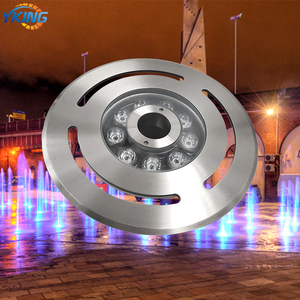
| Display Fountain Aerators (Amherst / Great Lakes series) | Combined decorative spray nozzle & surface de-stratification | 5.0 ft – 15.0 ft | 1.8 – 2.4 | Energy Corridor corporate campuses, luxury resort entrances |
| AquaSweep® Muck Blasters (Directional current injectors) | Submersible high-thrust current generation | 2.0 ft – 10.0 ft | N/A (Sediment focus) | Lakefront beaches, boat docks, canal silt removal |
| Off-Grid Solar Aeration (Direct-drive DC compressor systems) | Solar PV array driving bottom micro-bubble diffusers | 6.0 ft – 25.0 ft | 3.2 – 4.2 | Remote Harris County ranches, agricultural ponds, public parks |
In master-planned communities across Sugar Land, Cypress, and Katy, detention basins double as central visual amenities. High-performance display fountain aerators prevent stagnant water, eliminate duckweed accumulation, and maintain crystal-clear reflections while continuously infusing atmospheric oxygen into the top 6 feet of water.
Industrial complexes surrounding the Port of Houston and the Energy Corridor mandate strictly managed stormwater basins to comply with TCEQ (Texas Commission on Environmental Quality) discharge guidelines. Continuous-duty surface aerators accelerate the breakdown of industrial organic runoff and hydrocarbon residues.
High-salinity coastal turf grass management demands algae-free irrigation water to protect turf sprinklers from clogging. Subsurface diffuser systems destroy algae by starving them of bottom-bound phosphorus while maintaining 100% full-column oxygenation for sport fish stocking.
As urban density intensifies across Harris and Fort Bend counties, civil engineers and hydrologists are shifting toward sustainable, low-maintenance aeration infrastructure. Key trends influencing local procurement include:
Rooted in over 60 years of specialized manufacturing experience (founded in 1963), our partner factory in Holland, Michigan produces industry-leading aerators, fountains, de-icers, and custom hardware. Unlike third-party resellers or importers, direct factory engineering ensures direct access to OEM sizing experts, custom dock bracket fabrications, and immediate replacement parts availability.
Every commercial system undergoes rigorous pressure, electrical insulation, and hydrodynamic flow testing prior to dispatch. Orders typically ship within three business days, ensuring Houston engineers, marine contractors, and landscape architects meet tight project commissioning deadlines with uncompromised quality.
Expert guidance on sizing, installation, electricity management, and seasonal care in Southeast Texas climates.
Selection depends primarily on water depth and primary intent. For shallow ponds (under 6 to 8 feet deep), surface aerators (such as the Display Fountain Aerator, North Star, or Boilermaker) are ideal because they forcefully splash water into the atmosphere, maximizing gas exchange. For deeper lakes (over 8 feet) or irregular retention basins where quiet operation is desired, a subsurface bottom-diffuser system is superior as it circulates the entire deep water column without evaporation loss.
Yes. All structural brackets, motor housings, and fast hardware are fabricated using heavy-gauge 304 or 316 marine-grade stainless steel along with high-density UV-inhibited polyethylene floats. Our continuous-duty motors (including Franklin Electric power sources) are engineered to dissipate heat effectively even when ambient water temperatures exceed 90°F in coastal Harris and Galveston counties.
We supply units compatible with standard North American power configurations: 115V single-phase for smaller 1/2 HP units, 230V single-phase for standard 1 HP to 3 HP units, and 230V/460V three-phase motors for large-scale industrial 5 HP+ installations. All systems should be installed with dedicated GFCI protection and marine-rated underwater power cables sized according to distance to prevent voltage drop.
Standard production units typically ship from our central US factory within 3 business days following order placement. Transit time to Greater Houston addresses is usually 2 to 4 business days via standard freight, ensuring minimal downtime for urgent remediation or construction deadlines.
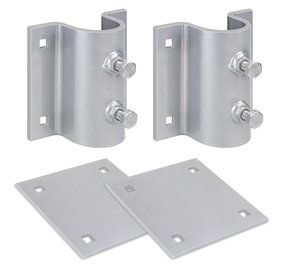
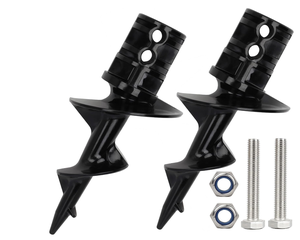
Absolutely. We manufacture custom steel structure dock brackets, pipe mounting posts, stationary and floating dock hardware, and 360-degree motor rotators (AquaSweep® line). Our engineering team routinely assists Houston civil contractors with custom bracket specifications for tailored basin geometries.
Connect directly with our factory application engineers. We provide complimentary pond sizing calculations, SOTR performance matching, electrical wiring guides, and direct wholesale quotation for commercial buyers across Texas.