Direct Factory Supply for Aquaculture, Municipal Lagoons, and Industrial Water Bodies across Tashkent, Fergana, Samarkand & Navoi
As Central Asia accelerates its agricultural modernization, industrial output, and intensive aquaculture under the Uzbekistan Strategy 2030, securing water quality in semi-arid conditions has transformed from an operational issue to a strategic requirement. Uzbekistan’s continental climate—characterized by extreme summer temperatures exceeding 40°C, elevated water evaporation rates, and shifting salinity gradients across the Amu Darya and Syr Darya river basins—creates severe biological and chemical stresses on artificial lakes, irrigation reservoirs, municipal lagoons, and commercial fish ponds.
Under elevated ambient temperatures, the solubility of dissolved oxygen (DO) in water drops precipitously. Simultaneously, organic loading from aquaculture feeds, cotton irrigation runoff, and industrial effluents accelerates Biological Oxygen Demand (BOD) and Chemical Oxygen Demand (COD). Without energetic, mechanical surface aeration, water bodies rapidly stratify. Warm, oxygen-depleted surface layers isolate cold, anoxic bottom layers, leading to massive algae blooms, toxic hydrogen sulfide (H₂S) emissions, severe fish mortality in commercial fisheries, and foul odors near urban development centers like Tashkent, Samarkand, and Fergana.
Selecting an industrial surface aerator for projects in Uzbekistan requires evaluating key hydrodynamic parameters beyond basic horsepower. The primary performance metric for industrial surface aerators is Standard Aeration Efficiency (SAE), expressed in kilograms of dissolved oxygen added per kilowatt-hour of energy consumed (kg O₂/kWh).
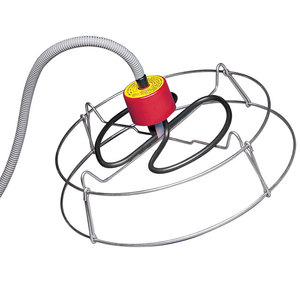
Our engineered surface aerators feature high-precision axial impellers driven by continuous-duty submersible motors designed for severe thermal environments. Operating at speeds engineered to balance droplet velocity with mechanical shearing, our surface aerators create a high-volume decorative boil and spray pattern. This mechanism achieves three crucial chemical-physical processes simultaneously:
Uzbekistan’s geographic diversity demands tailored water aeration strategies aligned with regional industrial and environmental parameters. Below are the primary application domains where our surface aerators provide verified operational benefits:
The Fergana Valley and Tashkent region lead Uzbekistan’s freshwater fish production, focusing on carp (Cyprinus carpio), silver carp, and grass carp. High stocking densities during peak summer months demand uninterrupted DO levels above 5.0 mg/L. Our floating surface splash aerators prevent nighttime hypoxia, increase feed conversion ratios (FCR), and prevent seasonal emergency fish kills.
Modern drip-irrigation systems supporting cotton and horticulture require clean, non-clogging water. Stagnant storage reservoirs in Jizzakh, Syrdarya, and Kashkadarya often suffer from massive blue-green algae blooms. Deploying surface aerators suppresses cyanobacteria growth by disrupting light availability and eliminating internal phosphorus loading from anaerobic sediments.
Heavy industrial complexes, textile plants, and metallurgical sites in Navoi and Almalyk generate high-COD process effluents. Our corrosion-resistant SS316L surface aerators are deployed in equalization basins and biological aeration tanks to maintain aerobic digestion, accelerate BOD reduction, and ensure compliance with state environmental standards.
Urban park water bodies and municipal stormwater retention basins in Samarkand, Bukhara, and Khiva require dual-purpose water management: high-capacity aeration combined with visual elegance. Decorative surface display aerators keep public park lakes crystal clear, odor-free, and visually striking for eco-tourism.
Water bodies in lower river reaches and near the Aral Sea basin possess elevated mineral concentration and salinity. Standard cast-iron equipment degrades rapidly. Our specialized high-density polyethylene (HDPE) pontoon floats and marine-grade stainless components provide long-term operational resilience against severe brackish corrosion.
To assist municipal engineers, commercial fish farm operators, and procurement specialists in selecting the optimal surface aerator configuration, the table below outlines technical specifications across our core product lines:
| Model Series | Motor Rating (HP / kW) | Water Flow (m³/hr) | SOTR (kg O₂/hr) | Optimal Pond Depth | Primary Uzbekistan Use Case |
|---|---|---|---|---|---|
| High-Speed Splash Series | 1.5 HP / 1.1 kW | 380 m³/hr | 1.85 kg O₂/hr | 1.0 - 2.5 meters | Aquaculture fish ponds & small reservoirs |
| Commercial Boilermaker | 3.0 HP / 2.2 kW | 720 m³/hr | 3.60 kg O₂/hr | 1.5 - 4.0 meters | Municipal lagoons & agricultural storage |
| Industrial Floating Impeller | 5.0 HP / 3.7 kW | 1,150 m³/hr | 6.10 kg O₂/hr | 2.0 - 5.5 meters | Industrial wastewater & mining equalization |
| Decorative Display Aerator | 2.0 HP / 1.5 kW | 450 m³/hr | 2.10 kg O₂/hr | 1.2 - 3.0 meters | Urban resort lakes & historic city parks |
| Solar Off-Grid Surface Unit | 1.0 HP / 0.75 kW (DC) | 290 m³/hr | 1.30 kg O₂/hr | 0.8 - 2.0 meters | Remote pastoral ponds & off-grid farms |
Selecting a long-term supplier for surface aeration machinery in Uzbekistan involves evaluating manufacturing origin, component quality, and global technical support. Unlike trading companies or white-label re-assemblers, our engineering heritage spans over 60 years of specialized manufacturing in Holland, Michigan, USA.
Every motor housing, shaft, fastener, and structural bracket is crafted from heavy-gauge stainless steel (SS304/SS316L). Paired with UV-stabilized, high-density polyethylene floats, our aerators resist intense UV exposure, seasonal freeze-thaw cycles, and aggressive saline environments.
Traditional paddlewheel aerators rely on mechanical gearboxes that frequently leak oil, strip gears, and require heavy monthly maintenance. Our surface aerators utilize direct-drive, oil-free, food-grade motor systems that eliminate gear maintenance and contamination risks in fish ponds.
With standardized manufacturing lines, regular orders ship directly from our factory within three business days. We provide comprehensive export documentation, door-to-port logistics via established Eurasian transit corridors, and direct technical consultations for installation teams in Uzbekistan.
The water technology landscape in Uzbekistan is undergoing rapid transformation driven by national sustainability directives and economic growth. Key industry developments include:
With industrial electricity tariffs adjusting across Uzbekistan, municipal and commercial enterprises are prioritizing energy efficiency. Modern surface aerators equipped with Variable Frequency Drives (VFD) allow operators to adjust motor RPM based on real-time Dissolved Oxygen sensor feedback. Lowering aerator speed during daytime photosynthetically active hours reduces electrical consumption by up to 35% while maintaining critical oxygen safety margins at night.
For agricultural ranches, remote fish farms, and water storage ponds far from grid power in Bukhara, Navoi, or Surkhandarya, extending high-voltage power lines is often cost-prohibitive. Direct-drive DC solar surface aerators with smart controllers offer zero-emissions daytime aeration, mitigating summer thermal turnover risks without ongoing fuel costs for diesel generators.
Uzbekistan’s Ministry of Water Resources and State Committee for Ecology and Environmental Protection have tightened regulations regarding wastewater discharges into natural rivers. Municipalities and industrial plants are rapidly upgrading lagoon aerators to prevent anaerobic odor complaints and comply with lower biochemical load thresholds.
Common questions from B2B clients, project engineers, and procurement managers in Uzbekistan:
Our export aerator units are custom-engineered with multi-voltage, heavy-duty industrial electric motors rated specifically for 220V Single-Phase or 380V-415V Three-Phase 50Hz power grids. Motors feature thermal overload protection and tight voltage-tolerance windings to withstand regional voltage fluctuations common in rural agricultural areas.
For brackish waters or mineralized irrigation runoff in areas like Karakalpakstan or Aral region basins, we supply SS316L marine-grade stainless steel assemblies. Under continuous operating conditions, our structural components and motor housings carry an operational design life exceeding 10 to 15 years with minimal annual maintenance.
For shallow to medium-depth water bodies (depths under 3.5 to 4 meters), surface aerators provide significantly higher mechanical mixing volume and higher oxygen transfer per horsepower. They are easier to install (no underwater self-weighted tubing required) and can be deployed rapidly without draining the pond or halting operations.
We work directly with major international freight forwarders providing sea-air and overland rail transit options into Uzbekistan (Tashkent ICD, Samarkand, or regional customs terminals). All equipment is packed in heavy export-grade wooden crates with full HS Code documentation, Certificate of Origin, and technical datasheets required for smooth customs clearance.
Yes. In northern regions of Uzbekistan where surface ice forms during winter, our submersible surface aerators can function as heavy-duty de-icers. By continuously pushing warmer bottom water to the surface, they maintain open water zones to protect dock infrastructure, retain gas exchange pathways, and prevent winter fish kills.
Absolutely. Our engineering team provides detailed sizing calculations based on your water body's surface area, total water volume, depth profile, biological oxygen demand (BOD), and target Dissolved Oxygen level. Contact our team to receive custom CAD drawings, electrical spec sheets, and official B2B quotes.
Speak directly with our technical team for custom aerator sizing, factory-direct pricing, and Eurasian freight delivery schedules.
Get a Quote